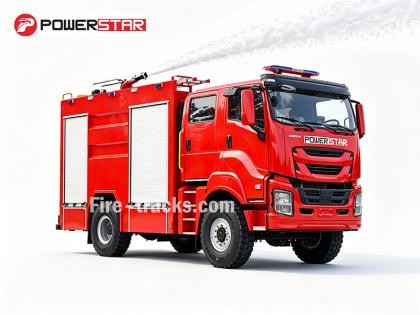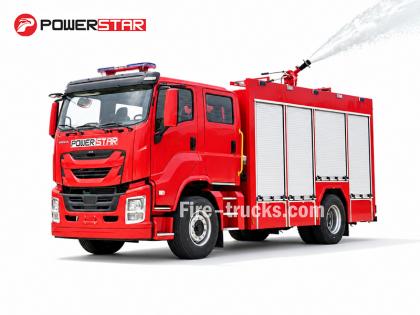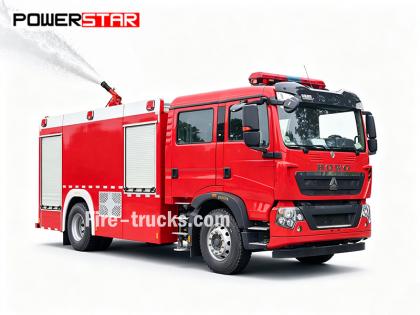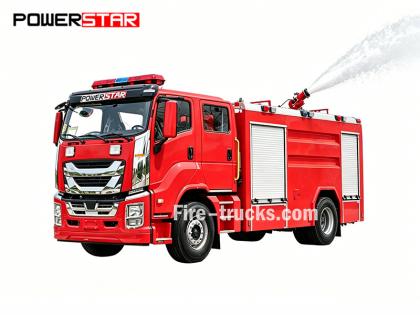
မက်ဆေ့ခ်ျထားခဲ့ပါ
ကျွန်တော်တို့ရဲ့ထုတ်ကုန်တွေကို စိတ်ဝင်စားရင်နဲ့ အသေးစိတ်သိချင်ရင် ဒီမှာမက်ဆေ့ခ်ျထားခဲ့ပါ၊ ကျွန်တော်တို့က အမြန်ဆုံး ပြန်လည်ဖြေကြားပေးပါမယ်။

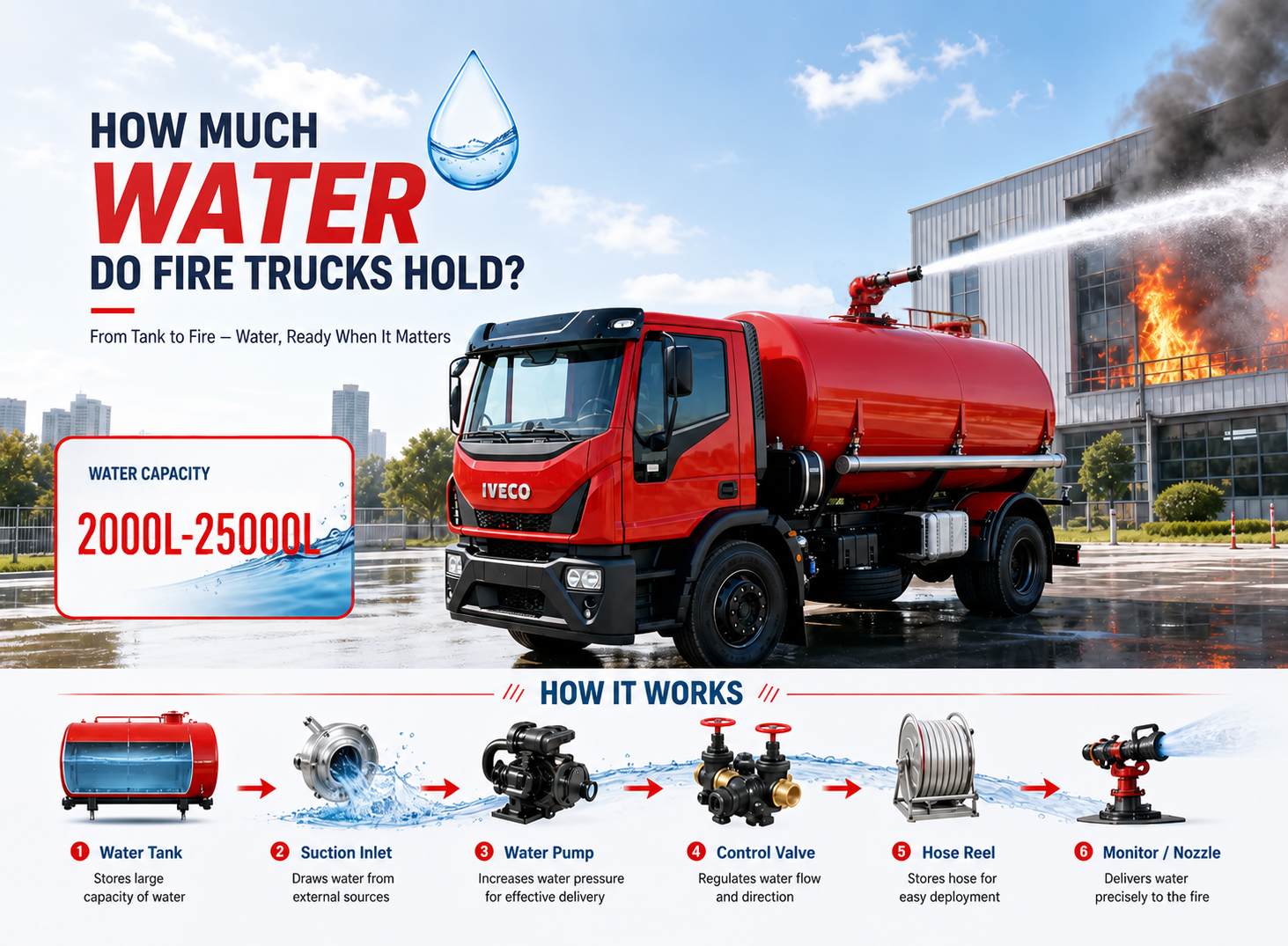
မီးသတ်ကားတစ်စီးက ရေဘယ်လောက် သယ်ဆောင်နိုင်သလဲ။ ဤမေးခွန်းသည် ကျွန်ုပ်တို့၏ဖောက်သည်များ မီးသတ်ကားရွေးချယ်ရာတွင် ပထမဆုံး ရင်ဆိုင်ရသော မေးခွန်းများထဲမှ တစ်ခုဖြစ်သည်။ သတ်မှတ်ထားသော တစ်ခုတည်းသော ကိန်းဂဏန်းမရှိပါ — ယာဉ်အမျိုးအစား၊ ကိုယ်ထည်ခံနိုင်ရည်၊ ဒီဇိုင်းရည်ရွယ်ချက်နှင့် ဒေသဆိုင်ရာ စည်းမျဉ်းများပေါ် မူတည်ပြီး 2,000 လီတာရှိ ပေါ့ပါးအသုံးပြုနိုင်သော ယူနစ်များမှ 25,000 လီတာရှိ စက်မှုလုပ်ငန်းသုံး မီးသတ်ကားများအထိ ကွာခြားနိုင်သည်။ သို့သော် တိုင်ကီပိုကြီးခြင်းသည် အမြဲတမ်း စွမ်းဆောင်ရည်ပိုကောင်းသည်ဟု မဆိုလိုပါ။မီးငြှိမ်းသတ်ရေးယာဉ် ရေတိုင်ကီပမာဏကို ထိရောက်သော မီးငြှိမ်းသတ်မှုရလဒ်များ ရရှိစေရန် ပန့်ရေစီးနှုန်း၊ မော်နီတာမှ ရေထုတ်လွှတ်နှုန်းနှင့် ကိုယ်ထည်ခံနိုင်ရည်တို့နှင့် သင့်လျော်စွာ ကိုက်ညီအောင် သတ်မှတ်ရမည်။
ဤဆောင်းပါးသည် မီးသတ်ကားရေတိုင်ကီပမာဏ၏ အခြေခံအချက်များမှ စတင်ပြီး ယာဉ်အမျိုးအစားအလိုက် ပုံမှန်ရေသိုလှောင်နိုင်သည့် ပမာဏများကို ခွဲခြမ်းစိတ်ဖြာကာ တိုင်ကီဒီဇိုင်းကို သက်ရောက်စေသော အဓိကအချက်များကို လေ့လာပြီး လက်တွေ့ဝယ်ယူရေး လမ်းညွှန်ချက်များကို ပေးထားသည်။
အဓိကအချက်များ:
မီးသတ်ကားရေတိုင်ကီပမာဏသည် ပုံမှန်အားဖြင့် 2,000 မှ 25,000 လီတာအထိ ရှိသည်
မီးသတ်ကားအမျိုးအစား မတူညီပါက ရေတိုင်ကီပမာဏလည်း မတူညီသည်
တိုင်ကီပိုကြီးခြင်းသည် မီးငြှိမ်းသတ်နိုင်စွမ်း ပိုကောင်းသည်ဟု မဆိုလိုပါ
တိုင်ကီပမာဏကို ပန့်ရေစီးနှုန်း၊ မော်နီတာစီးနှုန်းနှင့် ကိုယ်ထည်ခံနိုင်ရည်တို့နှင့် ကိုက်ညီအောင် သတ်မှတ်ရမည်
စက်မှုလုပ်ငန်းသုံး မီးငြှိမ်းသတ်မှုတွင် ပုံမှန်အားဖြင့် တိုင်ကီကြီးများ လိုအပ်ပြီး မြို့ပြမီးငြှိမ်းသတ်မှုတွင် လှုပ်ရှားရလွယ်ကူမှုကို ဦးစားပေးသည်
ရေပန့်မီးသတ်ကားများ:ဤကားများသည် မြို့ပြအသုံးပြုသော အများဆုံးတွေ့ရသည့် မီးသတ်ကားများဖြစ်သည်။ ၎င်းတို့သည် ရေပေးဝေရန် အဓိကအားဖြင့် မီးသတ်ရေပိုက်ခေါင်းများကို အားထားပြီး အစပိုင်းတိုက်ခိုက်မှုအတွက် ကားပေါ်တွင် ခန့်မှန်းခြေ 1,900–3,800 လီတာ ရေ သယ်ဆောင်ထားသည်။ ဤယာဉ်များ၏ အဓိကအစိတ်အပိုင်းမှာ တိုင်ကီမဟုတ်ဘဲ ပန့်ဖြစ်ပြီး ရေပိုက်ခေါင်းနှင့် ချိတ်ဆက်ပြီးနောက် ဖိအားရှိသော ရေကို ပို့လွှတ်ရန် ဒီဇိုင်းပြုလုပ်ထားသည်။
ရေသယ်မီးသတ်ကားများ (Water Tenders):ဤယာဉ်များသည် ရေပမာဏအများအပြား သယ်ယူရန် အထူးပြုထားပြီး တိုင်ကီပမာဏသည် ပုံမှန်အားဖြင့် 11,400 လီတာထက် ကျော်လွန်သည်။ မီးသတ်ရေပိုက်ခေါင်းများ မရရှိနိုင်သော ကျေးလက်နှင့် ဝေးလံသောဒေသများတွင် အရေးကြီးသော အခန်းကဏ္ဍမှ ပါဝင်ပြီး ရေအရင်းအမြစ်များမှ မီးလောင်ရာနေရာသို့ ရေကို သယ်ဆောင်ကာ ပန့်မီးသတ်ကားများ အသုံးပြုနိုင်ရန် ပံ့ပိုးပေးသည်။
ရေပန့်နှင့် ရေသယ်ပေါင်းစပ်မီးသတ်ကားများ:ဤယာဉ်များသည် ရေပန့်လုပ်ဆောင်ချက်နှင့် ရေသယ်ယူမှုလုပ်ဆောင်ချက်တို့ကို ယူနစ်တစ်ခုတည်းတွင် ပေါင်းစပ်ထားသည်။ ၎င်းတို့သည် မီးငြှိမ်းသတ်ရန် ရေကို ထုတ်လွှတ်နိုင်သကဲ့သို့ အခြားယာဉ်များကိုလည်း ရေပေးနိုင်သည်။ တိုင်ကီပမာဏသည် ပုံမှန်အားဖြင့် 5,700 မှ 11,400 လီတာအထိ ရှိပြီး မီးသတ်ဌာနများအတွက် စွယ်စုံအသုံးပြုနိုင်သော ဖြေရှင်းချက်တစ်ခုဖြစ်သည်။
| မီးသတ်ကားအမျိုးအစား | ပုံမှန်တိုင်ကီပမာဏ | အဓိကအသုံးပြုမှု |
|---|---|---|
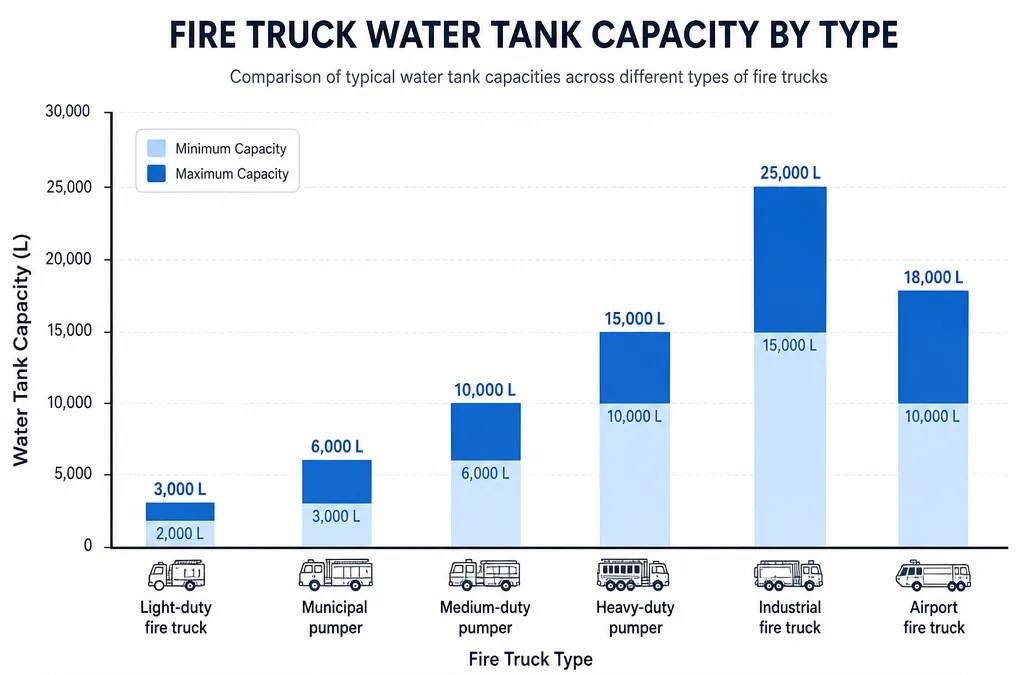
| ပေါ့ပါးအသုံးပြုနိုင်သော မီးသတ်ကား | 2,000–3,000 L | မြို့ပြ အမြန်တုံ့ပြန်မှု၊ အစပိုင်းတိုက်ခိုက်မှု |
| မြို့နယ်သုံး ရေပန့်မီးသတ်ကား | 3,000–6,000 L | မြို့နယ်မီးငြှိမ်းသတ်မှု၊ အဆောက်အအုံမီးလောင်မှုများ |
| အလယ်အလတ်တာဝန် ရေပန့်မီးသတ်ကား | 6,000–10,000 L | မြို့ပြနှင့် စက်မှုလုပ်ငန်းတာဝန်များ ပေါင်းစပ်အသုံးပြုမှု |
| အကြီးစားတာဝန် ရေပန့်မီးသတ်ကား | 10,000–15,000 L | ကြာရှည်လုပ်ဆောင်မှု၊ အဝေးအကွာ တုံ့ပြန်မှု |
| စက်မှုလုပ်ငန်းသုံး မီးသတ်ကား | 15,000–25,000 L | ရေနံ၊ ဓာတုပစ္စည်း၊ သတ္တုတွင်း မီးငြှိမ်းသတ်မှု |
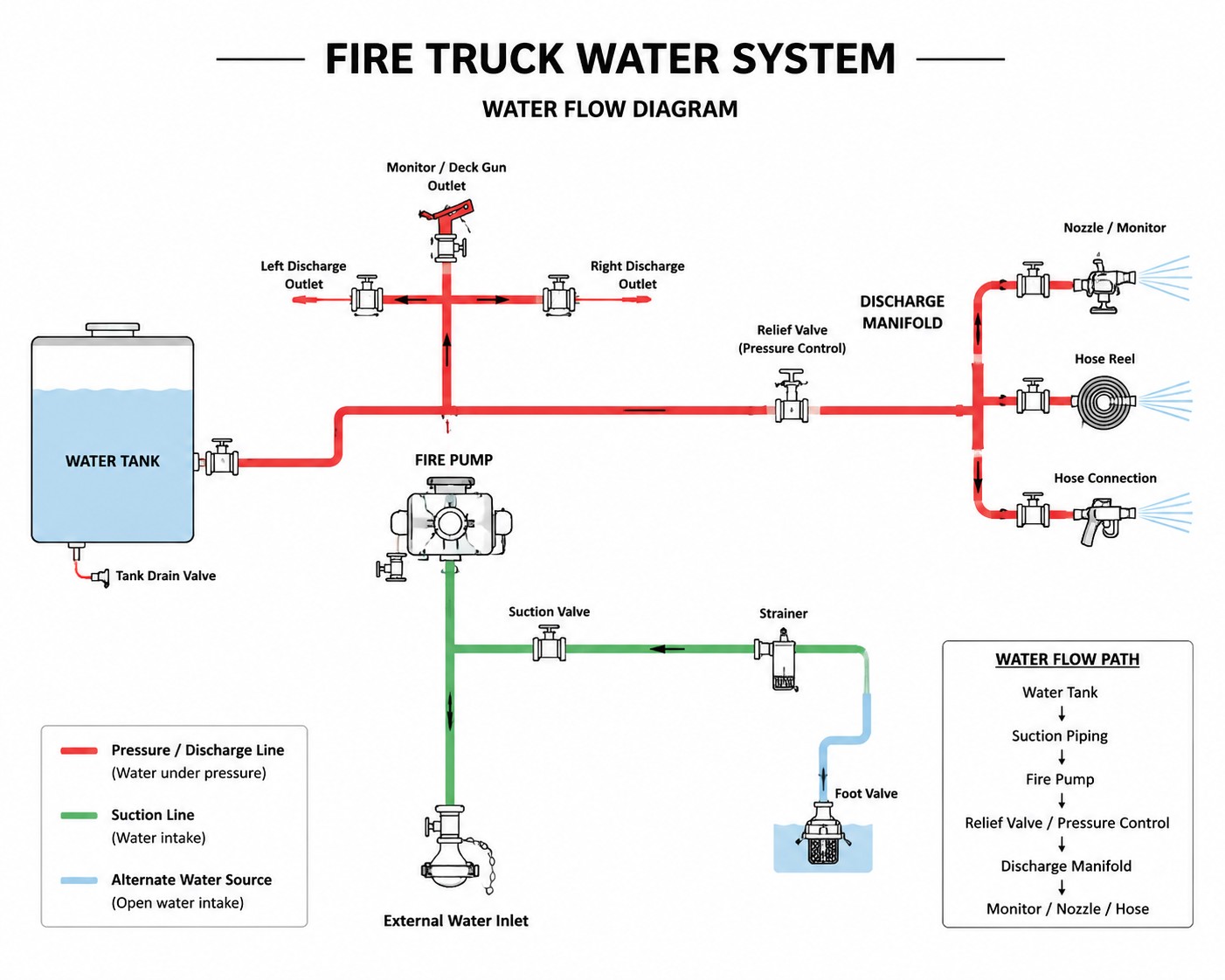
မီးသတ်ကားသည် ရွေ့လျားနိုင်သော ရေတိုင်ကီတစ်ခုသာ မဟုတ်ဘဲ ပြည့်စုံသော ရေပို့ဆောင်ရေးစနစ်တစ်ခုဖြစ်သည်။ တိုင်ကီအတွင်း သိုလှောင်ထားသောရေသည် မီးသို့ ရောက်ရှိနိုင်ရန် အဓိကအစိတ်အပိုင်းများစွာကို ဖြတ်သန်းရမည်။ ပြည့်စုံသော စီးဆင်းမှုလမ်းကြောင်းမှာ:
ရေတိုင်ကီ → ရေဝင်ပိုက်စနစ် → မီးသတ်ပန့် → ဖိအားထိန်းချုပ်မှုစနစ် → ရေထုတ်ခွဲပိုက် → မီးသတ်မော်နီတာ/နော်ဇယ်/ပိုက်
ရေတိုင်ကီ
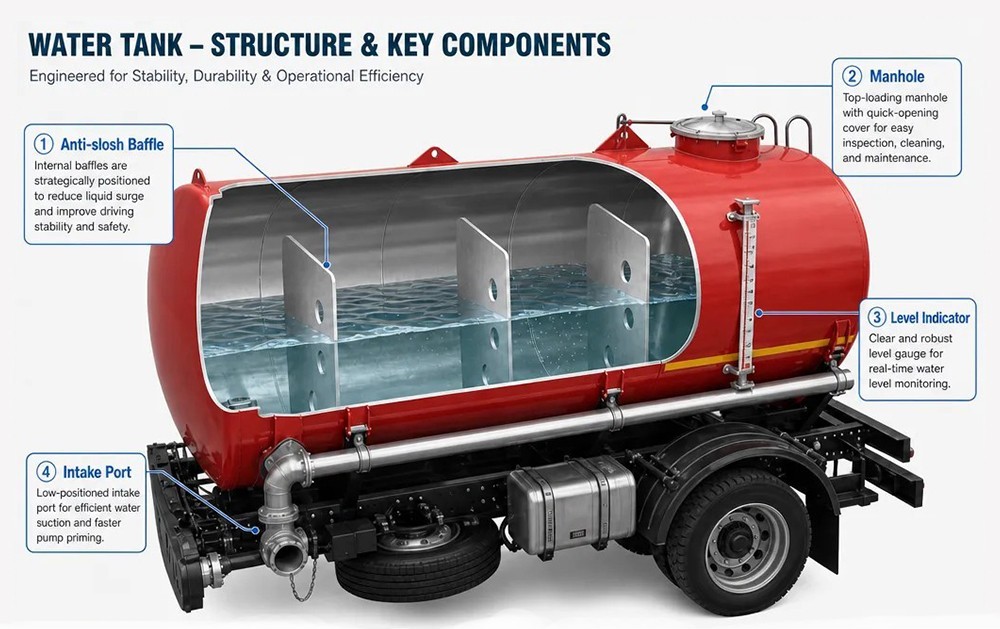
ရေတိုင်ကီသည် အဓိက သိုလှောင်ကန်ဖြစ်သည်။ ၎င်း၏ ဒီဇိုင်းသည် အသုံးပြုနိုင်သော ရေပမာဏနှင့် အသုံးခံသက်တမ်းကို တိုက်ရိုက် သက်ရောက်စေသည်။
ရေလှုပ်ရှားမှုတားဆီးခွဲကာများ:မောင်းနှင်နေစဉ်နှင့် ချွန်ထက်သော ကွေ့များတွင် ရေတိုးလှုပ်ရှားမှုကို တားဆီးပေးပြီး ယာဉ်တည်ငြိမ်မှုကို ထိန်းသိမ်းပေးသော အတွင်းပိုင်း ခွဲကန့်များဖြစ်သည်။
ချေးစားမှုခံနိုင်ရည်ရှိသော ပစ္စည်းများ:ရေကြောင့် ရေရှည်ချေးစားမှုကို ခံနိုင်ရည်ရှိစေရန် တိုင်ကီများကို ပုံမှန်အားဖြင့် 304 သံမဏိ သို့မဟုတ် အလွှာဖုံး ကာဗွန်သံမဏိဖြင့် ပြုလုပ်ထားသည်။
လူဝင်ပေါက်:တိုင်ကီအတွင်းပိုင်း စစ်ဆေးခြင်း၊ သန့်ရှင်းရေးနှင့် ပြုပြင်ထိန်းသိမ်းခြင်းများ ပြုလုပ်ရန် တိုင်ကီအပေါ်ဘက်တွင်ရှိသော ဝင်ပေါက်ဖြစ်သည်။
အဆင့်ညွှန်ပြကိရိယာ:ကျန်ရှိနေသော ရေပမာဏကို အချိန်နှင့်တပြေးညီ ပြသပေးပြီး လုပ်ဆောင်သူများအား မီးငြှိမ်းသတ်ရေး မဟာဗျူဟာများ စီစဉ်ရာတွင် ကူညီပေးသည်။
ရေဝင်ပိုက်စနစ်
ရေဝင်ပိုက်စနစ်သည် တိုင်ကီမှ ရေကို မီးသတ်ပန့်သို့ ပို့ဆောင်ပေးသည်။ စီးဆင်းမှုခုခံအားကို လျှော့ချရန် ပုံမှန်အားဖြင့် အချင်းကြီးပိုက်များကို အသုံးပြုပြီး၊ ရေပြန်စီးဝင်မှုကို တားဆီးရန် စစ်ဆေးအဆို့ရှင်တပ်ဆင်ထားကာ အမှိုက်အကျန်များ ပန့်အတွင်းဝင်ရောက်ခြင်းမှ ကာကွယ်ရန် စစ်ကာတပ်ဆင်ထားသည်။
မီးသတ်ပန့်
မီးသတ်ပန့်သည် ရေစနစ်၏ အင်အားအဓိကအစိတ်အပိုင်းဖြစ်သည်။ ၎င်း၏ တာဝန်များမှာ:
ပိုက်ခုခံအားနှင့် ဒေါင်လိုက်မြင့်တက်မှုကို ကျော်လွှားရန် ရေဖိအားတည်ဆောက်ပေးခြင်း
မီးငြှိမ်းသတ်ရေး လိုအပ်ချက်ကို ဖြည့်ဆည်းရန် ရေစီးနှုန်းကို တိုးမြှင့်ပေးခြင်း
ကြာရှည်လုပ်ဆောင်မှုများအတွက် အဆက်မပြတ် ရေပေးဝေခြင်း
ရေထုတ်စနစ်
ဖိအားမြင့်ရေကို ရေထုတ်ခွဲပိုက်မှတစ်ဆင့် မီးသတ်ရေဖျန်းကိရိယာများ (အများအပြားသောရေပမာဏဖြင့် အဝေးမှ မီးငြှိမ်းသတ်ခြင်း)၊ လက်ကိုင်ရေဖျန်းခေါင်းများ (တိကျသော မီးငြှိမ်းသတ်ခြင်း)၊ ဖိအားမြင့်ပိုက်လိပ်များ (နေရာကန့်သတ်မီးများ သို့မဟုတ် အမြန်တုံ့ပြန်မှုအတွက်) နှင့် ရေထုတ်ပေါက်များစွာ (တစ်ပြိုင်နက် ပိုက်ချိတ်ဆက်မှုများ) သို့ ပို့ဆောင်ပေးသည်။
လူအများက 10,000 လီတာတိုင်ကီသည် 10,000 လီတာရေကို ထုတ်လွှတ်နိုင်သည်ဟု ယူဆကြသည်။ အမှန်တကယ်တွင် အသုံးပြုနိုင်သော ရေပမာဏသည် ပုံမှန်အားဖြင့် တိုင်ကီ၏ သတ်မှတ်ပမာဏထက် နည်းပါးသည်။ အဓိကအကြောင်းရင်းများမှာ:
1. စုပ်ယူဝင်ပေါက် အမြင့်ကန့်သတ်ချက်
မီးသတ်ပန့်၏ စုပ်ယူဝင်ပေါက်သည် ပုံမှန်အားဖြင့် ရေတိုင်ကီအောက်ခြေနှင့် တစ်ပြေးညီမဟုတ်ဘဲ တိုင်ကီအောက်ခြေအထက် အမြင့်တစ်ခုတွင် တပ်ဆင်ထားသည်။ ၎င်းသည် အောက်ခြေတွင် အနည်ကျနေသော အညစ်အကြေးများနှင့် အမှုန်များကို စုပ်ယူမိခြင်းမှ ကာကွယ်ရန် ဒီဇိုင်းပြုလုပ်ထားခြင်းဖြစ်သည်။ သို့သော် ထိုသို့ပြုလုပ်ထားခြင်းကြောင့် အောက်ခြေအလွန်နီးရှိ ရေ၏ ခန့်မှန်းခြေ 5%–10% ကို ပန့်ဖြင့် စုပ်ယူအသုံးပြုနိုင်မည်မဟုတ်ပါ။
2. လေသည် မီးသတ်ပန့်အတွင်း ဝင်ရောက်ခြင်းမှ ကာကွယ်ခြင်း
လေကို ပန့်ကိုယ်ထည်အတွင်း စုပ်ယူမိခြင်းမှ ကာကွယ်ရန် စုပ်ယူဝင်ပေါက်သည် အချိန်တိုင်း ရေအောက်တွင် အပြည့်အဝ နစ်မြုပ်နေ해야သည်။ လေဝင်သွားပါက ပန့်သည် ရေမရှိဘဲ လည်ပတ်နိုင်ပြီး၊ ကာဗီတေးရှင်း ဖြစ်စဉ် (လေဖောင်းပူဖောင်းများနှင့် ရေတို့ ရောနှောနေသော အခြေအနေတွင် အင်ပဲလာလည်ပတ်ကာ ပေါက်ကွဲပျက်စီးသော ပူဖောင်းများမှ ထွက်ပေါ်သည့် လှိုင်းတုန်မှုများက အင်ပဲလာကို ပျက်စီးစေခြင်း) ဖြစ်ပေါ်နိုင်ပြီး ဖိအားကို ရုတ်တရက် ကျဆင်းစေနိုင်သည်။ ပြင်းထန်သောအခြေအနေများတွင် မီးသတ်ပန့်ကို ပျက်စီးစေနိုင် သို့မဟုတ် လုံးဝဖျက်ဆီးနိုင်သည်။
3. တိုင်ကီအတွင်းရှိ ခွဲကာများ၏ သက်ရောက်မှု
ခွဲကာများသည် တိုင်ကီကို အခန်းငယ်များစွာအဖြစ် ခွဲပေးသည်။ ယာဉ်ရွေ့လျားစဉ် ရေလှုပ်ရှားမှုကို ထိရောက်စွာ လျှော့ချပေးနိုင်သော်လည်း ထိုအခန်းများ၏ အောက်ခြေရှိ စီးဆင်းပေါက်များသည် အတော်လေး သေးငယ်သည်။ ရေအဆင့်နိမ့်သောအခါ ရေစီးနှုန်းကို ကန့်သတ်ထားသဖြင့် ရေအချို့သည် စုပ်ယူပိုက်ဧရိယာသို့ အချိန်မီ မရောက်နိုင်ပါ။
| သတ်မှတ်ပမာဏ | အသုံးပြုနိုင်သော ပမာဏ | ဆုံးရှုံးမှုနှုန်း |
|---|---|---|
| 5,000 L | ခန့်မှန်းခြေ 4,500–4,700 L | 6%–10% |
| 10,000 L | ခန့်မှန်းခြေ 9,000–9,400 L | 6%–10% |
| 15,000 L | ခန့်မှန်းခြေ 13,500–14,100 L | 6%–10% |
ကိုက်ညီမှု မူဝါဒ:ပန့်၏ ရေစီးနှုန်းသည် အလွန်မြင့်ပါက တိုင်ကီထဲရှိ ရေသည် မိနစ်အနည်းငယ်အတွင်း ကုန်ဆုံးသွားမည်ဖြစ်သည်။ ရေစီးနှုန်းသည် အလွန်နိမ့်ပါက တိုင်ကီ၏ ကြီးမားသော သိုလှောင်ပမာဏကို အပြည့်အဝ အသုံးမပြုနိုင်ပါ။ ယေဘုယျ အကြံပြုချက်အနေဖြင့် သတ်မှတ်စီးနှုန်းဖြင့် ဆက်တိုက် ရေထုတ်လွှတ်နိုင်သည့် အချိန်သည် ၅–၁၀ မိနစ်ထက် မနည်းသင့်ပါ။
| တိုင်ကီ ပမာဏ | အကြံပြုထားသော ပန့် ရေစီးနှုန်း | အကြံပြုထားသော အသုံးပြုမှု |
|---|---|---|
| ၂,၀၀၀ လီတာ | ၃၀ လီတာ/စက္ကန့် | မီးသတ်ယာဉ်ငယ်များ၊ ရပ်ရွာ မီးငြှိမ်းသတ်ရေး |
| ၃,၀၀၀–၅,၀၀၀ လီတာ | ၄၀ လီတာ/စက္ကန့် | မြို့နယ် မီးငြှိမ်းသတ်ရေး၊ ကနဦး တိုက်ခိုက်မှု |
| ၆,၀၀၀–၈,၀၀၀ လီတာ | ၆၀ လီတာ/စက္ကန့် | မြို့နယ် မီးငြှိမ်းသတ်ရေး၊ အဆောက်အအုံ မီးလောင်မှုများ |
| ၁၀,၀၀၀–၁၅,၀၀၀ လီတာ | ၈၀ လီတာ/စက္ကန့် | စက်မှုလုပ်ငန်း မီးငြှိမ်းသတ်ရေး၊ ရေရှည် လုပ်ဆောင်မှုများ |
| ၁၅,၀၀၀ လီတာနှင့် အထက် | ၁၀၀ လီတာ/စက္ကန့်နှင့် အထက် | ရေနံဓာတုလုပ်ငန်း၊ လေဆိပ် မီးငြှိမ်းသတ်ရေး |
၁။ ကိုယ်ထည် ဝန်တင်နိုင်စွမ်း
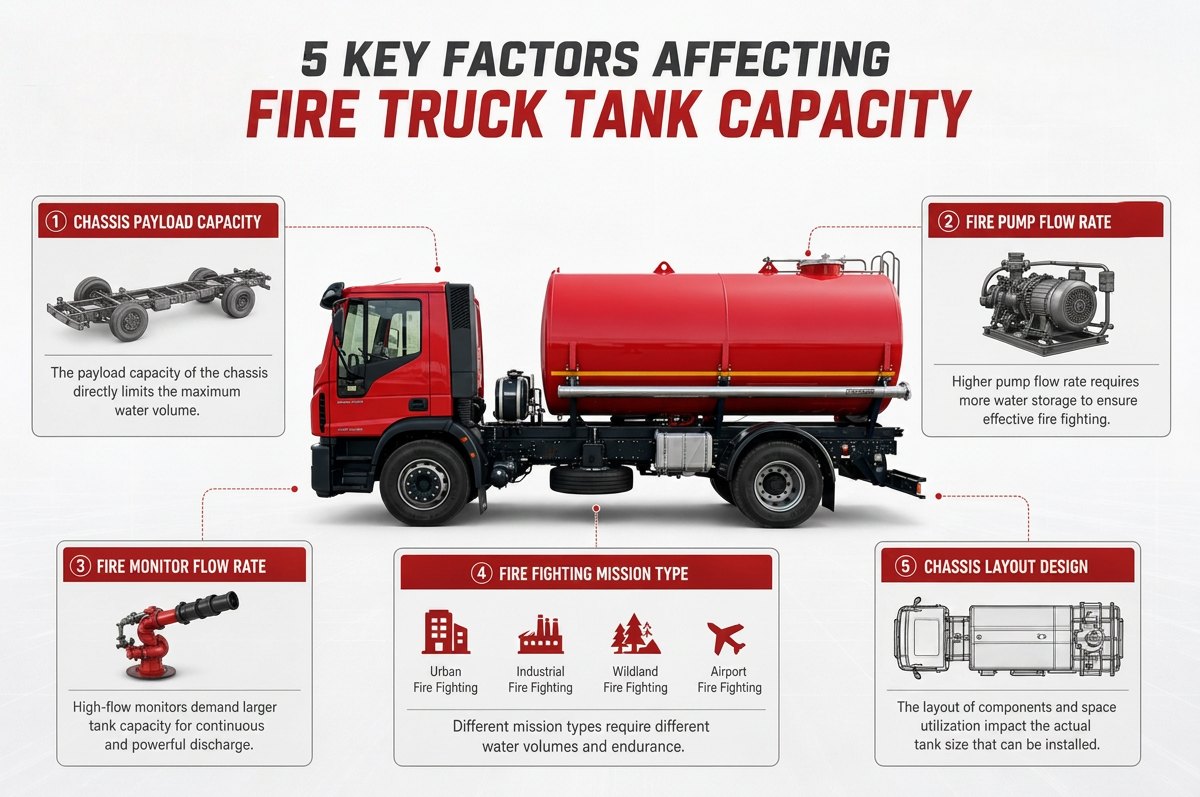
ရေတိုင်ကီ ပမာဏကို အဓိကအားဖြင့် ယာဉ်၏ စုစုပေါင်း အလေးချိန် (GVW) က ကန့်သတ်ထားသည်။ အများသုံး မီးသတ်ယာဉ် ကိုယ်ထည်များတွင် 4×2၊ 6×4 နှင့် 8×4 မောင်းနှင်စနစ် ပုံစံများ ပါဝင်သည်။ ဘီးအခြေ အရှည်ပိုမိုရှည်လျားပြီး ဝင်ရိုးအရေအတွက် များလေလေ စုစုပေါင်း ဝန်တင်နိုင်စွမ်း ပိုမိုမြင့်မားလေလေ ဖြစ်သည်။ ဥပမာအားဖြင့် 6×4 ကိုယ်ထည်သည် ပုံမှန်အားဖြင့် 4×2 ကိုယ်ထည်ထက် ပိုမိုကြီးမားသော ရေတိုင်ကီကို တပ်ဆင်နိုင်သည်။ ထို့အပြင် ယာဉ်သည် အပြည့်တင်ထားသည့် အခြေအနေနှင့် အလွတ်အခြေအနေ နှစ်မျိုးစလုံးတွင် တည်ငြိမ်မှုနှင့် လှုပ်ရှားထိန်းချုပ်နိုင်မှုကို ထိန်းသိမ်းနိုင်ရန် ရေတိုင်ကီ တပ်ဆင်သည့်နေရာတွင် ရှေ့နှင့်နောက် ဝင်ရိုး ဝန်ဖြန့်ဝေမှုကို ထည့်သွင်းစဉ်းစားရမည်။
၂။ မီးသတ်ပန့် ရေစီးနှုန်း
မီးသတ်ပန့် ရေစီးနှုန်းနှင့် ရေတိုင်ကီ ပမာဏကို သင့်လျော်စွာ ကိုက်ညီစေရန်မှာ အရေးကြီးသည်။ ရေစီးနှုန်း ၃၀ လီတာ/စက္ကန့်ရှိသော ပန့်အတွက် ၁၀,၀၀၀ လီတာ တိုင်ကီသည် ခန့်မှန်းခြေအားဖြင့် ၅.၅ မိနစ်အတွင်း အလွတ်ဖြစ်နိုင်သည်။ ၆၀ လီတာ/စက္ကန့် ပန့်ဖြင့်ဆိုလျှင် ၃ မိနစ်အောက်အတွင်း ရေကုန်နိုင်သည်။ ပန့်၏ ရေစီးနှုန်း မြင့်လေလေ ရေတိုင်ကီ ကုန်ဆုံးနှုန်း မြန်လေလေ ဖြစ်သည်။ ထို့ကြောင့် သတ်မှတ်ချက်များ ရွေးချယ်ရာတွင် ဆက်တိုက် လည်ပတ်ချိန် လုံလောက်စေရန် ရေစီးနှုန်းမြင့် ပန့်ကို ပိုမိုကြီးမားသော တိုင်ကီနှင့် တွဲဖက်သင့်သည်။ ဆန့်ကျင်ဘက်အားဖြင့် ရေစီးနှုန်းနိမ့် ပန့်ကို အလွန်ကြီးမားသော တိုင်ကီနှင့် တွဲဖက်ပါက ယာဉ်၏ ဝန်တင်နိုင်စွမ်းနှင့် ကုန်ကျစရိတ်ကို အလဟဿ ဖြစ်စေသည်။
၃။ မီးသတ်ရေဖျန်းကိရိယာ ရေစီးနှုန်း
မီးသတ်ရေဖျန်းကိရိယာများသည် ရေကို အများဆုံး အသုံးပြုသော ကိရိယာများထဲမှ တစ်ခုဖြစ်သည်။ အရွယ်ကြီး ရေဖျန်းကိရိယာများတွင် ရေစီးနှုန်း ၄၈–၁၀၀ လီတာ/စက္ကန့် သို့မဟုတ် ထို့ထက်ပိုနိုင်သည်။ ရေစီးနှုန်းမြင့် ရေဖျန်းကိရိယာသည် ရေတိုင်ကီတစ်ခုလုံးကို မိနစ်အနည်းငယ်အတွင်း ကုန်ဆုံးစေနိုင်သည်။ ထို့ကြောင့် ရေစီးနှုန်းမြင့် ရေဖျန်းကိရိယာ တပ်ဆင်ထားသော မီးသတ်ယာဉ်များသည် သက်ဆိုင်ရာ ကြီးမားသော ရေတိုင်ကီများ တပ်ဆင်ထားရမည် သို့မဟုတ် ပြင်ပ ရေအရင်းအမြစ်နှင့် လျင်မြန်စွာ ချိတ်ဆက်နိုင်ရမည်။
၄။ မီးငြှိမ်းသတ်ရေး လုပ်ငန်းအမျိုးအစား
မီးလောင်မှု အမျိုးအစား မတူညီမှုများသည် ရေတိုင်ကီ ပမာဏအပေါ် မတူညီသော လိုအပ်ချက်များ ဖြစ်ပေါ်စေသည်။ မြို့ပြ အဆောက်အအုံ မီးလောင်မှုများတွင် မီးသတ်သမားများသည် ပုံမှန်အားဖြင့် ၃–၅ မိနစ်အတွင်း မီးသတ်ရေဘုံဘိုင်များနှင့် ချိတ်ဆက်နိုင်သောကြောင့် ယာဉ်ပေါ်ရှိ တိုင်ကီကို အဓိကအားဖြင့် ကနဦး မီးငြှိမ်းသတ်ရန် အသုံးပြုကာ ပမာဏလိုအပ်ချက်မှာ အလယ်အလတ် ဖြစ်သည်။ စက်မှုလုပ်ငန်း မီးလောင်မှုများတွင် မီးဖြစ်ပွားရာနေရာသည် ရေဘုံဘိုင်များနှင့် ဝေးကွာလေ့ရှိပြီး မီးငြှိမ်းသတ်ရေး လုပ်ငန်းများ ပိုမိုကြာရှည်သဖြင့် ၁၀,၀၀၀ လီတာကျော် အကြီးစား တိုင်ကီများ လိုအပ်သည်။ တောမီးများအတွက် မီးသတ်ယာဉ်များသည် အကွာအဝေးရှည် သွားလာရပြီး ဆက်တိုက် ရေထုတ်လွှတ်ရသောကြောင့် ပမာဏနှင့် ခံနိုင်ရည် နှစ်ခုစလုံး အရေးကြီးသည်။
၅။ ကိုယ်ထည် ဖွဲ့စည်းပုံ
ကိုယ်ထည်ပေါ်တွင် ရေတိုင်ကီ၊ ဖိုမ်တိုင်ကီနှင့် ပစ္စည်းခန်းများ၏ စီစဉ်တပ်ဆင်ပုံသည် တပ်ဆင်နိုင်သော အများဆုံး ရေတိုင်ကီ ပမာဏကို တိုက်ရိုက် သက်ရောက်စေသည်။ အင်ဂျင် တည်နေရာသည် ရရှိနိုင်သော နေရာကို သတ်မှတ်ပေးသည်။ ဖိုမ်တိုင်ကီ ထည့်သွင်းခြင်းသည် နေရာအချို့ကို အသုံးပြုသည်။ ထို့အပြင် ပစ္စည်းခန်းများ၏ အရေအတွက်နှင့် အရွယ်အစားတို့သည်လည်း နောက်ဆုံး ရေတိုင်ကီ ပမာဏကို တိုက်ရိုက် သက်ရောက်စေသည်။
၁။ မီးသတ်ယာဉ်တစ်စီးသည် ပုံမှန်အားဖြင့် ရေဘယ်လောက် သယ်ဆောင်နိုင်သလဲ။
မြို့နယ်သုံး မီးသတ်ယာဉ်အများစုသည် ၃,၀၀၀–၁၀,၀၀၀ လီတာ သယ်ဆောင်နိုင်သည်။ စက်မှုလုပ်ငန်းသုံး မီးသတ်ယာဉ်ကြီးများသည် ၁၅,၀၀၀–၂၅,၀၀၀ လီတာအထိ ရောက်ရှိနိုင်ပြီး မီးသတ်ယာဉ်ငယ်များသည် ယာဉ်အမျိုးအစားနှင့် ရည်ရွယ်ချက်ပေါ်မူတည်၍ ပုံမှန်အားဖြင့် ၅၀၀–၁,၅၀၀ လီတာ သယ်ဆောင်နိုင်သည်။
၂။ မည်သည့် မီးသတ်ယာဉ်အမျိုးအစားတွင် တိုင်ကီ ပမာဏ အကြီးဆုံးရှိသနည်း။
စက်မှုလုပ်ငန်းသုံး မီးသတ်ယာဉ်ကြီးများနှင့် လေဆိပ် မီးသတ်ယာဉ်များတွင် ပုံမှန်အားဖြင့် အကြီးဆုံး တိုင်ကီများ ပါရှိပြီး အချို့မော်ဒယ်များတွင် ၂၀,၀၀၀ လီတာကျော် ရှိသည်။
၃။ တိုင်ကီ ပိုကြီးလေလေ အမြဲတမ်း ပိုကောင်းသလား။
မလိုအပ်ပါ။ တိုင်ကီ ပမာဏသည် ကိုယ်ထည်၏ စွမ်းရည်၊ ပန့်၏ စွမ်းဆောင်ရည်နှင့် အမှန်တကယ် အသုံးပြုမှု လိုအပ်ချက်များနှင့် ကိုက်ညီရမည်။ တိုင်ကီကိုသာ ပိုကြီးအောင် ရွေးချယ်ခြင်းသည် လှုပ်ရှားနိုင်မှု လျော့နည်းခြင်းနှင့် ကုန်ကျစရိတ် မြင့်တက်ခြင်းတို့ကို ဖြစ်စေနိုင်သည်။
၄။ အပြည့်တင်ထားသော မီးသတ်ယာဉ်တစ်စီး၏ အလေးချိန် ဘယ်လောက်ရှိသလဲ။
၎င်းသည် ယာဉ်အမျိုးအစားနှင့် တိုင်ကီ ပမာဏပေါ် မူတည်သည်။ ရေ ၁၀,၀၀၀ လီတာသည် ခန့်မှန်းခြေအားဖြင့် ၁၀ တန် အလေးချိန်ရှိသည်။ ယာဉ်၏ အလွတ်အလေးချိန် (ပုံမှန်အားဖြင့် ၁၀–၁၅ တန်) နှင့် ပေါင်းစပ်ပါက အပြည့်တင်ထားသော အလေးချိန်သည် ၂၀–၂၅ တန်အထိ ရောက်ရှိနိုင်ပြီး သင့်လျော်သော အဆင့်သတ်မှတ်ထားသော ကိုယ်ထည် လိုအပ်သည်။
၅။ မီးငြှိမ်းသတ်နေစဉ် မီးသတ်ယာဉ်သည် ရေပြန်ဖြည့်နိုင်ပါသလား။
ဟုတ်ပါသည်။ မီးသတ်ကားများသည် မီးသတ်ရေပိုက်ခေါင်းများ၊ သဘာဝရေအရင်းအမြစ်များ သို့မဟုတ် ရေသယ်ယာဉ်များမှ ရေကို အဆက်မပြတ် ဖြည့်တင်းနိုင်ပြီး ရေရှည်တည်တံ့သော မီးငြှိမ်းသတ်ရေး လုပ်ငန်းများကို ဆောင်ရွက်နိုင်စေပါသည်။
၆။ အမြှုပ်မီးသတ်ကားတွင် ရေသယ်ယာဉ်ထက် ရေတိုင်ကီအရွယ်အစား သေးငယ်ပါသလား။
ပုံမှန်အားဖြင့် ဟုတ်ပါသည်။ အမြှုပ်မီးသတ်ကားများတွင် ရေတိုင်ကီအပြင် အမြှုပ်တိုင်ကီအတွက်ပါ နေရာချန်ထားရသောကြောင့် တူညီသော ကိုယ်ထည်အခြေအနေအောက်တွင် ရေတိုင်ကီ၏ သိုလှောင်နိုင်စွမ်းမှာ ပုံမှန်အားဖြင့် လျော့နည်းပါသည်။
၇။ ကျွန်ုပ်၏ စီမံကိန်းအတွက် သင့်တော်သော တိုင်ကီပမာဏကို မည်သို့ သတ်မှတ်ရမည်နည်း။
မီးအမျိုးအစား၊ ရေရရှိနိုင်မှုအခြေအနေ၊ ပန့်ရေစီးနှုန်း၊ ကိုယ်ထည်စွမ်းရည်နှင့် စီမံကိန်းလိုအပ်ချက်များကို ထည့်သွင်းစဉ်းစားပါ။ ရရှိနိုင်သော အကြီးဆုံးတိုင်ကီကိုသာ ရွေးချယ်ရန် မဟုတ်ဘဲ သင့်လိုအပ်ချက်များနှင့် အကောင်းဆုံးကိုက်ညီသော ပမာဏကို ရွေးချယ်ပါ။
မီးသတ်ကား၏ ရေတိုင်ကီပမာဏသည် ပုံမှန်အားဖြင့် ၂,၀၀၀ မှ ၂၅,၀၀၀ လီတာအထိ ရှိပြီး၊ မတူညီသော လုပ်ငန်းဆောင်ရွက်မှုအခြေအနေများအတွက် မတူညီသော ပမာဏများကို သင့်လျော်စွာ အသုံးပြုကြသည်။ မြို့ပြမီးသတ်ရေးတွင် လှုပ်ရှားနိုင်စွမ်းကို ဦးစားပေးပြီး — ၃,၀၀၀–၆,၀၀၀ လီတာသည် ကနဦးတိုက်ခိုက်မှုအတွက် လုံလောက်ကာ ရေရှည်ထောက်ပံ့မှုအတွက် မီးသတ်ရေပိုက်ခေါင်းများကို အားထားသည်။ စက်မှုလုပ်ငန်းနှင့် လေဆိပ်မီးသတ်ရေးတွင် အကွာအဝေးရှည်နှင့် အချိန်ကြာမြင့်သော လုပ်ငန်းများအတွက် ၁၅,၀၀၀ လီတာ သို့မဟုတ် ထို့ထက်ပိုသော ပမာဏလိုအပ်သည်။ တောမီးသတ်ရေးတွင် ပမာဏနှင့် လမ်းကြမ်းသွားလာနိုင်စွမ်းကြား ဟန်ချက်ညီရန် လိုအပ်ပြီး ၆,၀၀၀–၁၀,၀၀၀ လီတာသည် အများအားဖြင့် အသုံးပြုသော ဖွဲ့စည်းပုံဖြစ်သည်။
မီးသတ်ကားကို ရွေးချယ်ရာတွင် တိုင်ကီပမာဏသည် အချက်တစ်ချက်သာ ဖြစ်ပါသည်။ ထိရောက်သော မီးငြှိမ်းသတ်ရေး စွမ်းဆောင်ရည်ကို ပေးစွမ်းနိုင်ရန် ၎င်းကို ပန့်ရေစီးနှုန်း၊ ရေဖျန်းကိရိယာ ဖွဲ့စည်းပုံ၊ ကိုယ်ထည်စွမ်းရည်နှင့် လုပ်ငန်းဆောင်ရွက်မှုလိုအပ်ချက်များနှင့် သင့်လျော်စွာ ကိုက်ညီအောင် ပြင်ဆင်ရမည်။


အောက်ပါအချက်အလက်များကိုသင်စိတ်ဝင်စားလိမ့်မည်
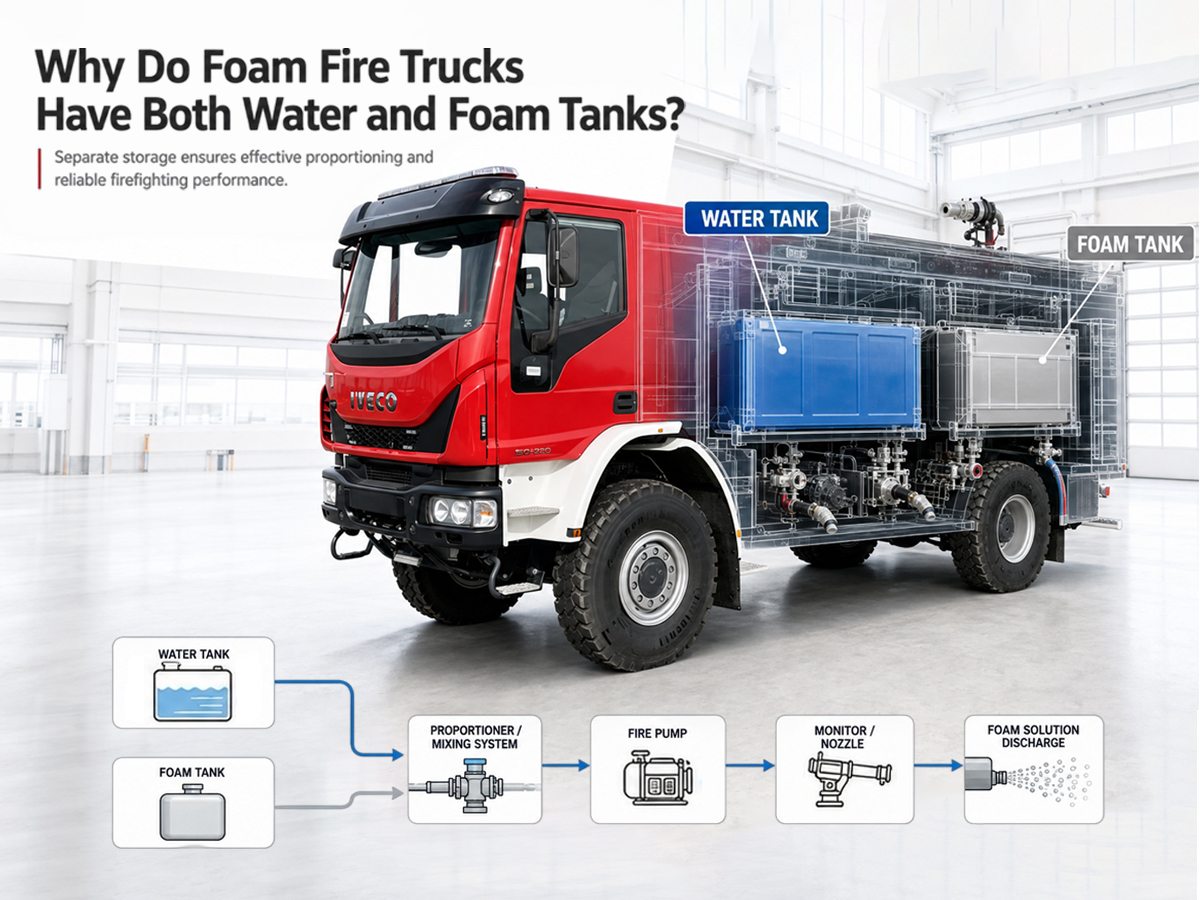
ဖော့မီးသတ်ကားများသည် သီးသန့်ဖော့အမြှုပ်စုပုံတိုင်ကီတစ်ခုကို သီးခြားရေတိုင်ကီတစ်ခုနှင့် တိကျသောအချိုးကျစနစ်တစ်ခုနှင့် ပေါင်းစပ်ထားသည်။ ၎င်းတို့သည် အချိုးကျစနစ်ကို အသုံးပြု၍ ရေစီးကြောင်းထဲသို့ အမြှုပ်စုပုံတိုင်ကီနှင့် မီးငြိမ်းသတ်ခြင်းအသုံးချမှုပေါ် မူတည်၍ သတ်မှတ်ထားသော செறிவு၊ များသောအားဖြင့် ၁%၊ ၃% သို့မဟုတ် ၆% တွင် ထည့်သွင်းသည်။နှစ်ထပ်တိုင်ကီဒီဇိုင်းက မီးသတ်သမားများအား အမြှုပ်မလိုအပ်သည့်အခါတွင် ရေကိုသာအသုံးပြုစေပြီး လိုအပ်သည့်အခါတွင်သာ အမြှုပ်အနှစ်ကို ထည့်သွင်းနိုင်စေပါသည်။ ၎င်းသည် လုပ်ငန်းလည်ပတ်မှုပြောင်းလွယ်ပြင်လွယ်ရှိမှုကို တိုးတက်စေပြီး အမြှုပ်သုံးစွဲမှုကို ထိန်းချုပ်ရန် ကူညီပေးပြီး မီးဘေးအန္တရာယ်အမျိုးမျိုးအတွက် မီးသတ်စနစ်ကို ပြင်ဆင်သတ်မှတ်နိုင်စေပါသည်။ အမြှုပ်မီးသတ်ကားများ၏ အဓိကအလုပ်လုပ်ပုံနိယာမနှင့် အဓိကနည်းပညာ၊ အထူးသဖြင့် ရေနှင့်အမြှုပ်တိုင်ကီနှစ်မျိုးလုံးပါရှိခြင်းတို့သည် ဖောက်သည်များစွာ၏ အာရုံစိုက်မှုဖြစ်သည်။ ယနေ့တွင် ၎င်းအကြောင်း လေ့လာကြပါစို့။ အမြန်အဖြေ- ရေနှင့် ရေမြှုပ်အမြှုပ်များသည် မတူညီသောအချိုးအစားများဖြင့် လိုအပ်ပြီး ကြိုတင်ရောစပ်ထားသော ပျော်ရည်အဖြစ် ကြာရှည်စွာ သိမ်းဆည်းမည့်အစား လည်ပတ်နေစဉ်အတွင်း ပေါင်းစပ်ရန် ရည်ရွယ်ထားသောကြောင့် ရေမြှုပ်မီးသတ်ကားများသည် ပုံမှန်အားဖြင့် သီးခြားရေနှင့် ရေမြှုပ်အမြှုပ်တိုင်ကီများကို အသုံးပြုကြသည်။ ရေတိုင်ကီသည် အဓိကရေထောက်ပံ့မှုကို ပံ့ပိုးပေးပြီး ရေမြှုပ်တိုင်ကီသည် အမြှုပ်အမြှုပ်ပါဝင်ပစ္စည်းများကို သိုလှောင်သည်။ အချိုးကျစနစ်သည် ရေစီးကြောင်းထဲသို့ အမြှုပ်မည်မျှထည့်သွင်းရမည်ကို ထိန်းချုပ်ပေးပြီး ရေကိုသာ အသုံးပြုသည့် မီးငြိမ်းသတ်သည့်ပုံစံနှင့် ရေမြှုပ်မီးသတ်သည့်ပုံစံများအကြား ပြောင်းလဲနိုင်စေပါသည်။ ငါ။ Foam မီးသတ်ကားရဲ့ အဓိက အစိတ်အပိုင်းတွေက ဘာတွေလဲ။ ၁။ ရေတိုင်ကီ သံချေးခံနိုင်ရည်ရှိသော တည်ဆောက်ပုံ (သံချေးမတက်အောင် အလွှာပါသော ကာဗွန်သံမဏိ သို့မဟုတ် သံမဏိ)၊ လီတာ ၄၀၀၀ မှ ၆၀၀၀ အထိ ပမာဏရှိသည်။ ယာဉ်ရွေ့လျားနေစဉ် အရည်များ မြင့်တက်လာခြင်းကို လျှော့ချရန် ဘန်ဖယ်များနှင့် ကြမ်းတမ်းသော မြေပြင်ပေါ်တွင် ကိုယ်ထည်ကွေးညွှတ်မှုကို စုပ်ယူရန် ပြောင်းလွယ်ပြင်လွယ်ရှိသော တပ်ဆင်မှုများ တပ်ဆင်ထားသည်။ ၂။ အမြှုပ်အနှစ်ထုတ် တိုင်ကီ တက်ကြွသော အမြှုပ်အနှစ်များမှ ဓာတုဗေဒဆိုင်ရာ တိုက်ခိုက်မှုကို ခံနိုင်ရည်ရှိစေရန် သံမဏိဖြင့် တည်ဆောက်ထားပြီး၊ ပုံမှန်အားဖြင့် ၅၀၀ မှ ၂၀၀၀ လီတာအထိ ဆံ့သည်။ အမြှုပ်အနှစ်နှင့် စနစ်ဒီဇိုင်းပေါ် မူတည်၍ သိုလှောင်မှုအတွင်း အနှစ်အနှစ်အခြေအနေကို ထိန်းသိမ်းရန် တိုင်ကီတွင် သွေးလည်ပတ်မှု သို့မဟုတ် မွှေနှောက်ခြင်း အစီအစဉ်ကဲ့သို့သော အင်္ဂါရပ်များ ပါဝင်နိုင်သည်။ ၃။ အမြှုပ်အချိုးကျစနစ် သီးသန့်ထားရှိသောနေရာမှ အမြှုပ်အနှစ်များကို ထုတ်ယူသည့် အချိုးကျစနစ်အမြှုပ်တိုင်ကီကို ထည့်ပြီး သတ်မှတ်ထားသော ပြင်းအားဖြင့် ရေစီးကြောင်းထဲသို့ ထည့်သွင်းသည်။ အမြှုပ်အနှစ်နှင့် စနစ်ဒီဇိုင်းပေါ် မူတည်၍ အချိုးကျစေခြင်းသည် ဟန်ချက်ညီသောဖိအား၊ ပန့်မောင်းနှင်သော သို့မဟုတ် venturi-based နည်းပညာကို အသုံးပြုနိုင်သည်။ ၄။ မီးသတ်ရေစုပ်စက် မီးသတ်စုပ်စက်သည် အမြှုပ်စနစ်တစ်ခုလုံး၏ စွမ်းအင်အရင်းအမြစ်ဖြစ်သည်။ ၎င်းသည် ရေတိုင်ကီမှ ရေကိုဆွဲယူပြီး မီးသတ်လုပ်ငန်းများအတွက် လိုအပ်သောစီးဆင်းမှုနှင့် ဖိအားအထိ ဖိအားပေးသည်။ စုပ်စက်ကို ယာဉ်၏ ပါဝါယူစက် (PTO) သို့မဟုတ် လွတ်လပ်သောအင်ဂျင်ဖြင့် မောင်းနှင်လေ့ရှိပြီး မတူညီသောစီးဆင်းမှုနှုန်းများတွင် အမြှုပ်အာရုံစူးစိုက်မှုထိုးသွင်းမှုကို တိကျစွာသေချာစေရန် အချိုးကျစနစ်နှင့် တွဲဖက်အသုံးပြုရမည်။ အသုံးများသော ဖွဲ့စည်းမှုပု...
အသေးစိတ်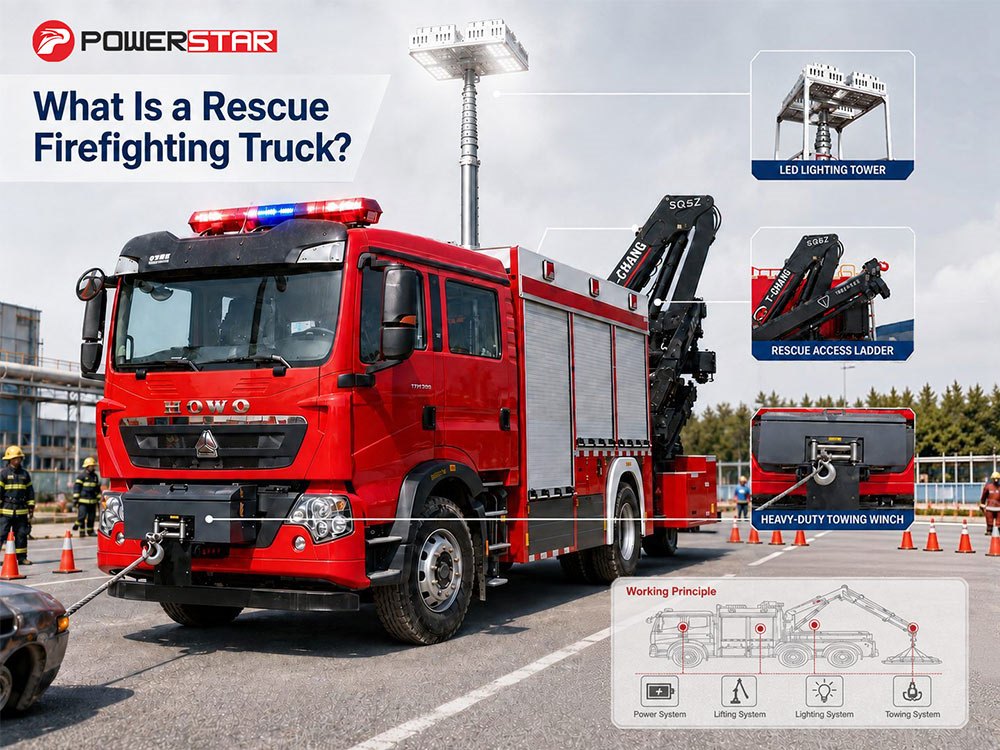
ကယ်ဆယ်ရေး မီးသတ်ကားသည် မီးငြှိမ်းသတ်ခြင်းနှင့် ကယ်ဆယ်ရေးလုပ်ငန်းများ နှစ်မျိုးလုံးလုပ်ဆောင်ရန် ဒီဇိုင်းထုတ်ထားသော အထူးပြု အရေးပေါ်ယာဉ်တစ်စီးဖြစ်သည်။ မီးငြှိမ်းသတ်ရာတွင် အဓိကအာရုံစိုက်သည့် စံမီးသတ်ကားများနှင့်မတူဘဲ၊ကယ်ဆယ်ရေး မီးသတ်ကားများမီးသတ်ပစ္စည်းများကို ကယ်ဆယ်ရေးကိရိယာများ၊ မြှင့်တင်ကိရိယာများ၊ ဖြတ်တောက်ခြင်းနှင့် ဖြန့်ကျက်ကိရိယာများ၊ ဝန်ချီကိရိယာများ၊ ဂျင်နရေတာများနှင့် မီးအလင်းရောင်စနစ်များနှင့် ပေါင်းစပ်ပါ။ ဤဆောင်းပါးသည် ကယ်ဆယ်ရေးမီးသတ်ကားဆိုသည်မှာ အဘယ်နည်း၊ အခြားမီးသတ်ယာဉ်များနှင့် မည်သို့ကွာခြားသည်၊ မည်သည့်ပစ္စည်းများ သယ်ဆောင်သည်နှင့် ၎င်းကို မည်သည့်အချိန်တွင် ဖြန့်ကျက်သည်ကို ရှင်းပြထားပါသည်။ I. ကယ်ဆယ်ရေး မီးသတ်ကားဆိုတာ ဘာလဲ။ ကယ်ဆယ်ရေး မီးသတ်ကားသည် မီးသတ်စွမ်းရည်များနှင့် အထူးပြု ကယ်ဆယ်ရေးပစ္စည်းများ ပေါင်းစပ်ထားသော ဘက်စုံသုံး အရေးပေါ်ယာဉ်တစ်စီးဖြစ်သည်။ လူများ၊ ယာဉ်များ၊ အဆောက်အအုံများ သို့မဟုတ် စက်မှုလုပ်ငန်းဆိုင်ရာ အဆောက်အအုံများ ပါဝင်သည့် အဖြစ်အပျက်များ ဖြစ်ပေါ်လာသည့်အခါ အရေးပေါ်တုံ့ပြန်မှုစွမ်းရည် ပြည့်စုံစေရန် အဓိကအားဖြင့် အသုံးပြုသည်။ ယာဉ်ဖွဲ့စည်းပုံပေါ် မူတည်၍ ကယ်ဆယ်ရေးမီးသတ်ထရပ်ကားများတွင် ကယ်ဆယ်ရေးကိရိယာများနှင့် မီးငြိမ်းသတ်စနစ်အမျိုးမျိုး တပ်ဆင်ထားနိုင်သည်။ အမှန်တကယ် ပစ္စည်းကိရိယာရွေးချယ်မှုသည် ယာဉ်၏ ရည်ရွယ်ထားသောအသုံးပြုမှုပေါ် မူတည်၍ ကွဲပြားသည်။ ဥပမာအားဖြင့် မြို့ပြကယ်ဆယ်ရေးအတွက် ပုံစံထုတ်ထားသော ယာဉ်တစ်စီးသည် စက်မှုလုပ်ငန်းကယ်ဆယ်ရေး၊ မြေငလျင်တုံ့ပြန်မှု သို့မဟုတ် အဝေးပြေးလမ်းမကြီး ယာဉ်မတော်တဆမှု ပြန်လည်ထူထောင်ရေးအတွက် ဒီဇိုင်းထုတ်ထားသော ယာဉ်တစ်စီးနှင့် ကွဲပြားသော ပစ္စည်းကိရိယာ အပြင်အဆင် ရှိနိုင်သည်။ II. ကယ်ဆယ်ရေး မီးသတ်ကားတွင် မည်သည့်ပစ္စည်းများ သယ်ဆောင်ထားသနည်း။ ကယ်ဆယ်ရေးမီးသတ်ထရပ်ကားပေါ်တွင် သယ်ဆောင်လာသော ပစ္စည်းကိရိယာများသည် ယာဉ်၏ဒီဇိုင်းနှင့် ရည်ရွယ်ထားသော အသုံးချမှုပေါ်တွင် မူတည်ပါသည်။ သို့သော် မော်ဒယ်အများစုရှိ ပစ္စည်းကိရိယာများကို အဓိကအမျိုးအစားများစွာအဖြစ် ခွဲခြားနိုင်သည်- မီးသတ်ပစ္စည်းများ၊ ကယ်ဆယ်ရေးကိရိယာများ၊ ပါဝါပစ္စည်းများ၊ မီးအလင်းရောင်ပစ္စည်းများ၊ မတင်ခြင်းနှင့် ဆွဲယူခြင်းပစ္စည်းများနှင့် ကိုယ်ရေးကိုယ်တာကာကွယ်ရေးပစ္စည်းများ။ ၁။ မီးသတ်ပစ္စည်းကိရိယာများ မီးသတ်ပစ္စည်းကိရိယာများတွင် မီးငြိမ်းသတ်ကိရိယာများ၊ မီးသတ်ပိုက်များ၊ မီးသတ်ခေါင်းများ၊ ရွှေ့ပြောင်းနိုင်သောစုပ်စက်များ၊ ရေတိုင်ကီများ၊ အမြှုပ်မီးငြိမ်းသတ်စနစ်များ၊ မီးငြှိမ်းသတ်စောင့်ကြည့်ကိရိယာများနှင့် အခြားငြိမ်းသတ်ကိရိယာများ ပါဝင်နိုင်သည်။ ၂။ ဟိုက်ဒရောလစ်ကယ်ဆယ်ရေးကိရိယာများ ယာဉ်မတော်တဆမှုကယ်ဆယ်ရေးလုပ်ငန်းများတွင် ပျက်စီးနေသောယာဉ်ဖွဲ့စည်းပုံများကို ဖြတ်တောက်ခြင်း၊ ဖြန့်ခြင်း သို့မဟုတ် မတင်ခြင်းအတွက် ဟိုက်ဒရောလစ်ကယ်ဆယ်ရေးကိရိယာများကို အသုံးများသည်။ အသုံးများသော ကိရိယာများတွင် ဟိုက်ဒရောလစ်ဖြတ်တောက်စက်များ၊ ဟိုက်ဒရောလစ်ဖြန့်စက်များနှင့် ဟိုက်ဒရောလစ်အုတ်များ ပါဝင်သည်။ ၃။ ဓာတ်အားပေးစက် အခင်းဖြစ်ပွားရာနေရာတွင် ပြင်ပပါဝါအရင်းအမြစ် မရရှိနိုင်သည့်အခါတွင် ဂျင်နရေတာများသည် ကယ်ဆယ်ရေးကိရိယာများ၊ မီးအလင်းရောင်ပစ္စည်းများ၊ ဆက်သွယ်ရေးကိရိယာများနှင့် အခြားပစ္စည်းကိရိယာများအတွက် လျှပ်စစ်ဓာတ်အား ထောက်ပံ့ပေးပါသည်။ ၄။ မီးအလင်းရောင်ပစ္စည်းများ အရေးပေါ်မီးစနစ်များသည် ညအချိန်၊ အဆောက်အအုံများအတွင်း၊ အဝေးပြေးလမ်းမကြီးများပေါ်တွင်နှင့် အခြားအလင်းရောင်နည်းသောအခြေအနေများတွင် ကယ်ဆယ်ရေးဝန်ထမ်းများ လည်ပတ်နိုင်ရန် ကူညီပေးပါသည်။ ၅။ ဝန်ချီစက်များနှင့် ဆွဲယူသည့်ပစ္စည်းမျာ...
အသေးစိတ်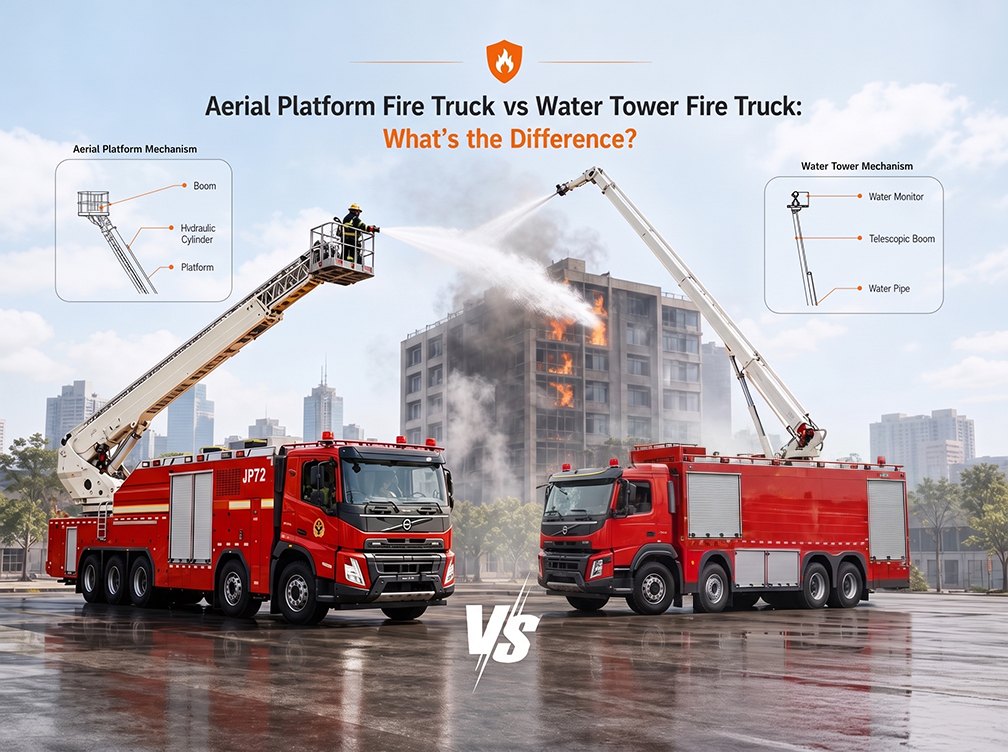
အထပ်မြင့်အဆောက်အအုံများ၊ စက်မှုလုပ်ငန်းအဆောက်အအုံများ သို့မဟုတ် ဂိုဒေါင်ကြီးများတွင် မီးငြှိမ်းသတ်ခြင်းနှင့် ပတ်သက်လာသောအခါ လေကြောင်းမီးသတ်ယာဉ်များသည် မရှိမဖြစ်လိုအပ်ပါသည်။ သို့သော် လေကြောင်းသုံးကိရိယာအမျိုးအစားများအနက် မကြာခဏ ရောထွေးနားလည်ခံရသည့် အမျိုးအစားနှစ်ခုရှိသည်။ လေကြောင်းပလက်ဖောင်း မီးသတ်ယာဉ် နှင့် ရေတာဝါ မီးသတ်ယာဉ် ဖြစ်သည်။ ပထမအမြင်တွင် ၎င်းတို့သည် ဆင်တူပုံပေါ်နိုင်သော်လည်း—နှစ်မျိုးစလုံးတွင် ဟိုက်ဒရောလစ်ဘွမ်များ ပါရှိပြီး အမြင့်နေရာများတွင် မီးငြှိမ်းသတ်ရန် ဒီဇိုင်းပြုလုပ်ထားသော်လည်း—၎င်းတို့၏ တာဝန်များမှာ အခြေခံအားဖြင့် ကွာခြားပါသည်။ ဤဆောင်းပါးသည် ယာဉ်အမျိုးအစားနှစ်ခုကြားရှိ အဓိကကွာခြားချက်များကို ခွဲခြမ်းဖော်ပြပြီး မီးသတ်ဝန်ဆောင်မှုကျွမ်းကျင်သူများ၊ ဝယ်ယူရေးမန်နေဂျာများနှင့် စက်ပစ္စည်းဖြန့်ချိသူများအား လုပ်ငန်းလည်ပတ်မှုလိုအပ်ချက်များအပေါ် အခြေခံ၍ အသိဉာဏ်ရှိသော ဆုံးဖြတ်ချက်များ ချမှတ်နိုင်ရန် ကူညီပေးပါသည်။ I. လေကြောင်းပလက်ဖောင်းယာဉ်များဆိုသည်မှာ အဘယ်နည်း? တရုတ်အမျိုးသားစံနှုန်း GB 7956.12-2015 အရ ယာဉ်နှစ်မျိုးစလုံးသည် လေကြောင်းမီးသတ်ယာဉ်များ အမျိုးအစားအောက်တွင် ပါဝင်ပြီး—အမြင့်နေရာလုပ်ငန်းများအတွက် အမြှောက်တင်ဘွမ်များ၊ လှည့်စားပွဲများနှင့် မီးသတ်ကိရိယာများ တပ်ဆင်ထားသော ယာဉ်များဖြစ်သည်။ သို့သော် ၎င်းတို့၏ သီးခြားအဓိပ္ပာယ်ဖွင့်ဆိုချက်များတွင် အရေးကြီးသော ကွာခြားချက်တစ်ရပ်ကို ဖော်ပြထားပါသည်။ လေကြောင်းပလက်ဖောင်း မီးသတ်ယာဉ် လေကြောင်းပလက်ဖောင်း မီးသတ်ယာဉ်တွင် ခေါက်နိုင်သော သို့မဟုတ် ခေါက်နိုင်ပြီး တယ်လီစကုပ်ပုံစံ ပေါင်းစပ်ဘွမ်၊ လူတင်ပလက်ဖောင်း၊ လှည့်စားပွဲနှင့် မီးသတ်ကိရိယာများ တပ်ဆင်ထားသည်။ သတ်မှတ်လက္ခဏာမှာ အလုပ်လုပ်ရန် ပလက်ဖောင်း (ပုံး) ဖြစ်ပြီး ၎င်းသည် ဘွမ်၏အဆုံးတွင် တည်ရှိကာ မီးသတ်သမားများက ကယ်ဆယ်ရေးနှင့် မီးငြှိမ်းသတ်ရေး လုပ်ငန်းများ ဆောင်ရွက်ရန် ရပ်နိုင်သောနေရာဖြစ်သည်။ အဓိကလက္ခဏာများ:• လူများနှင့် ကိရိယာများကို သယ်ဆောင်နိုင်သော ပလက်ဖောင်း တပ်ဆင်ထားပြီး 750 ပေါင်မှ 1,500 ပေါင်ကျော်အထိ သယ်ဆောင်နိုင်သည်• ကယ်ဆယ်ရေးနှင့် မီးငြှိမ်းသတ်ရေး နှစ်မျိုးစလုံးအတွက် ဒီဇိုင်းပြုလုပ်ထားပြီး—မီးသတ်သမားများသည် ပလက်ဖောင်းပေါ်မှ တိုက်ရိုက် လုပ်ဆောင်နိုင်သည်• ပလက်ဖောင်းကို အောက်ဆင်းထိန်းချုပ်ကိရိယာများ၊ ဟိုက်ဒရောလစ်ဝင်ချ်များ သို့မဟုတ် ကယ်ဆယ်ရေးလျှောများနှင့် အသုံးပြုနိုင်သည်• ရေတာဝါများနှင့် နှိုင်းယှဉ်ပါက အလျားလိုက်ရောက်ရှိနိုင်မှု ပိုမိုကျယ်ပြန့်ပြီး အလုပ်လုပ်နိုင်သော အကွာအဝေး ပိုမိုကြီးမားသည် II။ ရေတာဝါ မီးသတ်ယာဉ်များဆိုသည်မှာ အဘယ်နည်း? ရေတာဝါ မီးသတ်ယာဉ်တွင် ခေါက်နိုင်သော သို့မဟုတ် ခေါက်နိုင်ပြီး တယ်လီစကုပ်ပုံစံ ပေါင်းစပ်ဘွမ်၊ လှည့်စားပွဲနှင့် မီးသတ်ကိရိယာများ တပ်ဆင်ထားသည်—လူတင်ပလက်ဖောင်း မပါရှိပါ။ ထိုအစား ဘွမ်၏အဆုံးတွင် မီးသတ်ရေဖြန်းကိရိယာ (ရေမြောက်) ကို တပ်ဆင်ထားပြီး မြေပြင်မှ အဝေးထိန်းစနစ်ဖြင့် ထိန်းချုပ်နိုင်သည်။ အဓိကလက္ခဏာများ:• လူတင်ပလက်ဖောင်း မရှိပါ—မီးသတ်သမားများသည် အဝေးထိန်းစနစ်ဖြင့် မြေပြင်မှ လုပ်ဆောင်သည်• အဓိကအားဖြင့် အမြင့်နေရာ မီးငြှိမ်းသတ်ခြင်း ကိုသာ အာရုံစိုက်ပြီး ကယ်ဆယ်ရေး မဟုတ်ပါ• အလွန်မြင့်မားသော ရေစီးနှုန်းကို ပေးစွမ်းနိုင်သည်—တစ်မိနစ်လျှင် ဂါလံ ၂,၀၀၀ ကျော်အထိစက်မှုလုပ်ငန်းသုံး မော်ဒယ်အများအပြားတွင်ကယ်ဆယ်ရေးစွမ်းရည် မလိုအပ်သော စက်မှုလုပ်ငန်း မီးဘေးကာကွယ်ရေးအတွက် ဒီဇိုင်းပြုလုပ်ထားသည် III. ဘေးချင်းယှဉ် နှိုင်းယှဉ်ချက် အင်္ဂါရပ် အမြင့်တင်ပလက်ဖောင်း မီးသတ်ကား ရေတာဝါ မီးသတ်ကား အဓိကလုပ်ဆောင်ချက် ကယ်ဆယ်ရေး + မီးငြှိမ်းသတ်ရေး မီးငြ...
အသေးစိတ်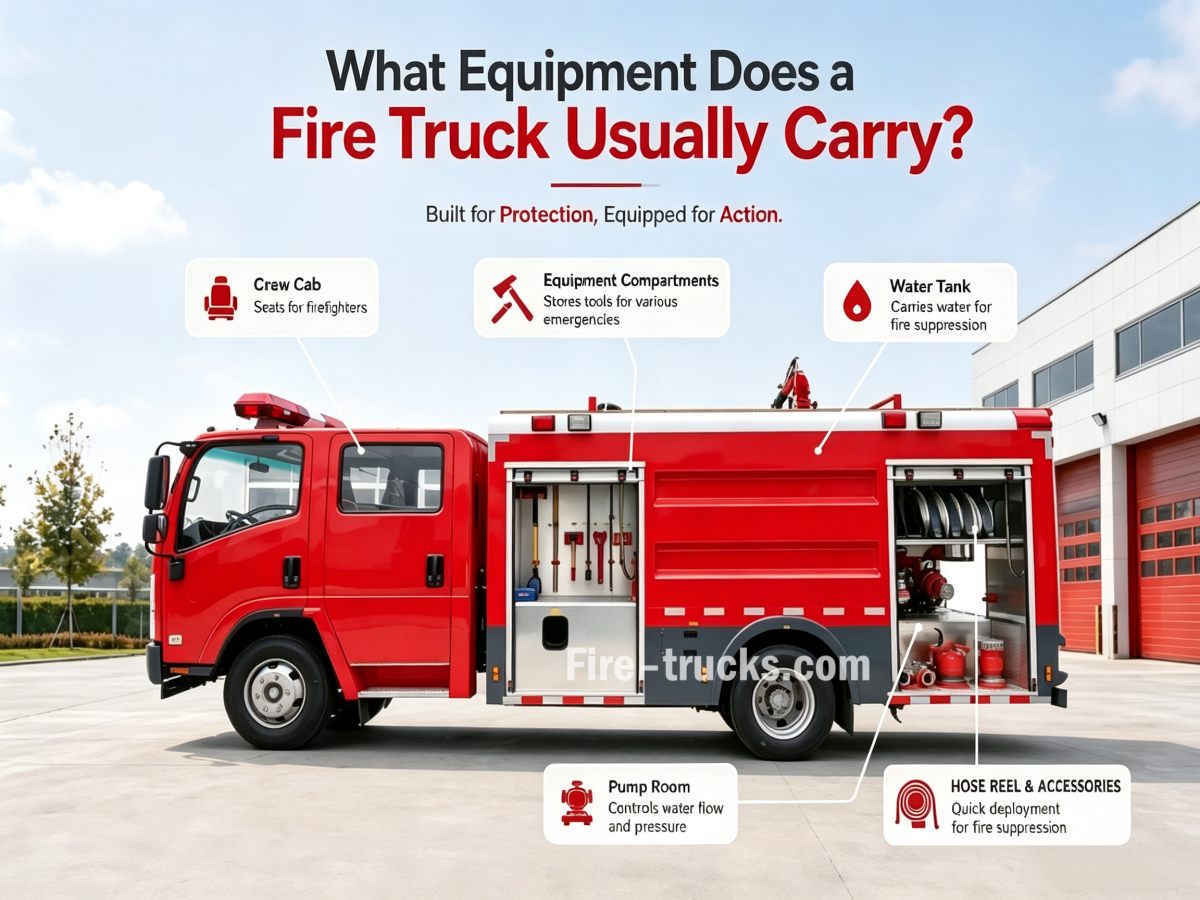
မီးသတ်ကားတစ်စီးတွင် ပုံမှန်အားဖြင့် မီးငြှိမ်းသတ်ရေး၊ ရေပေးဝေရေး၊ ကယ်ဆယ်ရေးနှင့် ဘေးကင်းလုံခြုံရေးကာကွယ်ရေး ပစ္စည်းများကို သယ်ဆောင်ထားသည်။ ပုံမှန်ပါဝင်သော ပစ္စည်းများတွင် မီးသတ်ပန့်များ၊ ရေတိုင်ကီများ၊ မီးသတ်ပိုက်များ၊ မီးသတ်ခေါင်းများ၊ မီးသတ်ရေစက်များ၊ ဗားလ်များ၊ မီးသတ်လှေကားများ၊ ကယ်ဆယ်ရေးကိရိယာများ၊ ကာကွယ်ရေးဝတ်စုံများနှင့် ဆက်သွယ်ရေးကိရိယာများ ပါဝင်သည်။ ဤဆောင်းပါးတွင် စံသတ်မှတ်ထားသော မီးသတ်ကားပစ္စည်းများ၏ အမျိုးအစားခွဲခြားမှု၊ လုပ်ဆောင်ချက်များနှင့် ရွေးချယ်ရာတွင် ထည့်သွင်းစဉ်းစားရမည့် အချက်များကို စနစ်တကျ ခွဲခြမ်းဖော်ပြထားပြီး ဝယ်ယူရေးကျွမ်းကျင်သူများနှင့် နောက်ဆုံးအသုံးပြုသူများအတွက် မီးသတ်ယာဉ်ဖွဲ့စည်းပုံများကို ပြည့်စုံစွာ နားလည်နိုင်ရန် ကူညီပေးသည်။ I. မီးသတ်ကားပစ္စည်းများ၏ အမျိုးအစားခွဲခြားမှု 1. မီးငြှိမ်းသတ်ရေးပစ္စည်းများ— တိုက်ရိုက်မီးငြှိမ်းသတ်ရန် အဓိကအသုံးပြုသော ကိရိယာများဖြစ်ပြီး မီးသတ်ခေါင်းများ၊ မီးသတ်ရေစက်များ၊ မီးသတ်ပိုက်များ၊ ရေခွဲစက်များနှင့် ချိတ်ဆက်ကိရိယာများ ပါဝင်သည်။ 2. ကယ်ဆယ်ရေးနှင့် ဖောက်ဖျက်ဝင်ရောက်ရေးပစ္စည်းများ— ကယ်ဆယ်ရေးနှင့် မီးငြှိမ်းသတ်ရေးလုပ်ငန်းများအတွက် ဝင်ရောက်လမ်းကြောင်းများ ဖန်တီးရန် အသုံးပြုသော ကိရိယာများဖြစ်ပြီး ဟိုက်ဒရောလစ်ကယ်ဆယ်ရေးကိရိယာများ၊ မီးသတ်ပုဆိန်များ၊ လီဗာတံများ၊ သံတံများ၊ ဖြတ်တောက်စက်များနှင့် ချိန်းဆွဲလွှများ ပါဝင်သည်။ 3. ကယ်ဆယ်ရေးနှင့် အသက်ကယ်ပစ္စည်းများ— လူများကို ရှာဖွေခြင်း၊ ရွှေ့ပြောင်းပို့ဆောင်ခြင်းနှင့် ကာကွယ်ခြင်းအတွက် အသုံးပြုသော ပစ္စည်းများဖြစ်ပြီး လှည်းထမ်းများ၊ ကယ်ဆယ်ရေးကြိုးများ၊ လုံခြုံရေးချိတ်များ၊ ဆင်းသက်မှုထိန်းချုပ်ကိရိယာများ၊ ကိုယ်တိုင်ပါဝင်အသက်ရှူကိရိယာ (SCBA) နှင့် အပိုလေဘူးများ ပါဝင်သည်။ 4. မီးခိုးထုတ်လွှတ်ရေးနှင့် အလင်းရောင်ပစ္စည်းများ— မီးလောင်ရာနေရာ၏ အခြေအနေများကို တိုးတက်ကောင်းမွန်စေရန် အသုံးပြုသော ပစ္စည်းများဖြစ်ပြီး မီးခိုးထုတ်စက်များ၊ ရွှေ့ပြောင်းနိုင်သော အလင်းရောင်မျှော်စင်များနှင့် သယ်ဆောင်နိုင်သော အလင်းအားမြင့် ရှာဖွေရေးမီးများ ပါဝင်သည်။ 5. ကိုယ်ပိုင်ကာကွယ်ရေးပစ္စည်းများ (PPE)— မီးသတ်သမားများ၏ ဘေးကင်းလုံခြုံရေးကို ကာကွယ်ရန် ဝတ်ဆင်အသုံးပြုသော ပစ္စည်းများဖြစ်ပြီး ဦးထုပ်များ၊ မီးငြှိမ်းသတ်ရေးကာကွယ်ဝတ်စုံများ၊ လက်အိတ်များ၊ ဘွတ်ဖိနပ်များနှင့် လုံခြုံရေးခါးပတ်များ ပါဝင်သည်။ 6. ဆက်သွယ်ရေးနှင့် စူးစမ်းရှာဖွေရေးပစ္စည်းများ— မီးလောင်ရာနေရာရှိ အချက်အလက်စုဆောင်းခြင်းနှင့် အမိန့်ညွှန်ကြားမှု ပူးပေါင်းဆောင်ရွက်ခြင်းအတွက် အသုံးပြုသော ပစ္စည်းများဖြစ်ပြီး နှစ်လမ်းသွားရေဒီယိုများ၊ အပူပုံရိပ်ဖမ်းကင်မရာများနှင့် အဆိပ်ဓာတ်ငွေ့ရှာဖွေစက်များ ပါဝင်သည်။ II. မီးသတ်ကားများပေါ်ရှိ မီးငြှိမ်းသတ်ရေးပစ္စည်းများ 1. မီးသတ်ပန့် မီးသတ်ပန့်သည် မီးငြှိမ်းသတ်ရေးလုပ်ငန်းအားလုံးအတွက် စွမ်းအင်ရင်းမြစ်ဖြစ်သည်။ ၎င်းသည် ရေကို စက်ပိုင်းဆိုင်ရာဖြင့် ဖိအားမြှင့်ပေးပြီး "ရေစုပ်ယူခြင်း → ဖိအားမြှင့်ခြင်း → ပို့ဆောင်ခြင်း → ထုတ်လွှတ်ခြင်း" လုပ်ငန်းစဉ်အပြည့်အစုံကို ပြီးမြောက်ရန် လုံလောက်သော ရွေ့လျားစွမ်းအင်ကို ပေးသည်။ ပုံမှန် မီးသတ်ပန့် သတ်မှတ်ချက်များ: •စံဖိအား မီးသတ်ပန့် (CB10/30 အမျိုးအစား):စီးဆင်းနှုန်း ≥30L/s၊ သတ်မှတ်ဖိအား 1.0MPa၊ နောက်ဘက်တပ်ဆင်ပုံစံ။ ပုံမှန်ရေသယ်ယာဉ်များနှင့် ဖိုမ်မီးသတ်ကားများအတွက် သင့်လျော်ပြီး မြို့ပြနှင့် စက်မှုလုပ်ငန်း မီးငြှိမ်းသတ်ရေး ရေပေးဝေမှုလိုအပ်ချက်အများစုကို ဖြည့်ဆည်းပေးနိုင်သည်။ •အလယ်အလတ်/မြင့်ဖိအား မီးသတ်ပန့်:ဖိအားနိမ့် စီးဆင်းနှုန်း 1.0MPa တွင် 30L/s၊ ဖိအားမြင့် စီးဆင်းနှုန...
အသေးစိတ်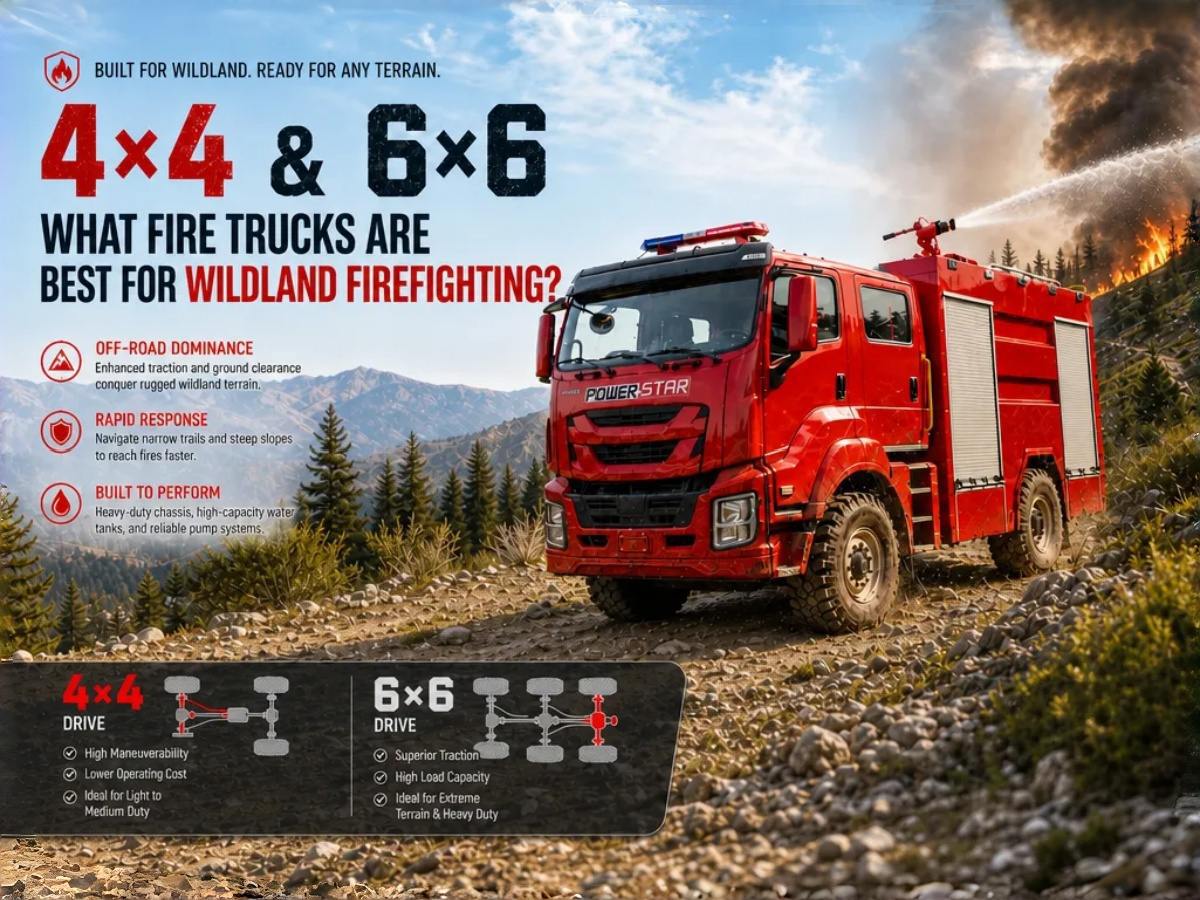
တောမီးငြှိမ်းသတ်ရေးသည် အဆောက်အအုံမီးငြှိမ်းသတ်ရေးနှင့် အခြေခံအားဖြင့် ကွဲပြားသော စိန်ခေါ်မှုများကို ဖြစ်ပေါ်စေသည်။ ဝေးလံသော သစ်တောများ၊ မြက်ခင်းပြင်များနှင့် တောင်တန်းဒေသများတွင် မီးသတ်ကားများသည် ကျဉ်းမြောင်းသော လမ်းကြောင်းများကို ဖြတ်သန်းသွားလာရပြီး၊ မတ်စောက်သော တောင်စောင်းများကို တက်ရောက်ရကာ မီးသတ်ရေပိုက်ခေါင်းများ သို့မဟုတ် ရေအရင်းအမြစ်များမှ ဝေးကွာသောနေရာများတွင် လည်ပတ်လုပ်ဆောင်ရသည်။ သင့်တော်သော မီးငြှိမ်းသတ်ရေးကား ကို ရွေးချယ်ခြင်းသည် တုံ့ပြန်ချိန်၊ အဖွဲ့သားများ၏ လုံခြုံရေးနှင့် မီးငြှိမ်းသတ်မှု ထိရောက်မှုတို့ကို တိုက်ရိုက်သက်ရောက်စေသော မဟာဗျူဟာကျ ဆုံးဖြတ်ချက်တစ်ခု ဖြစ်သည်။ ဤဆောင်းပါးတွင် တောမီးငြှိမ်းသတ်ရေးအတွက် အသင့်တော်ဆုံး မီးသတ်ကားအမျိုးအစားများ၊ ၎င်းတို့၏ အဓိကအင်္ဂါရပ်များနှင့် ရွေးချယ်နည်းများကို ပြည့်စုံစွာ ခွဲခြမ်းဖော်ပြထားပြီး သင်၏ သီးခြားလုပ်ငန်းလိုအပ်ချက်များအပေါ် အခြေခံ၍ မှန်ကန်သော ဆုံးဖြတ်ချက်ချနိုင်ရန် ကူညီပေးသည်။ အမြန်အဖြေ တောမီးများတွင် မီးလောင်ဧရိယာကြီးမားခြင်း၊ မြေမျက်နှာသွင်ပြင်ရှုပ်ထွေးခြင်း၊ ရေအရင်းအမြစ်ကန့်သတ်ခြင်းနှင့် လမ်းအခြေအနေမကောင်းခြင်းတို့ ရှိသောကြောင့် သစ်တောမီးအခြေအနေအားလုံးကို ကိုင်တွယ်နိုင်သည့် မီးသတ်ကားတစ်မျိုးတည်း မရှိပါ။ ယေဘုယျအားဖြင့် တောမီးငြှိမ်းသတ်ရေးတွင် အောက်ပါ မီးသတ်ကားအမျိုးအစားများကို အဓိကအသုံးပြုသည်။ • ပေါ့ပါးသော တောမီးသတ်ကားများ: သစ်တောလမ်းများသို့ ဝင်ရောက်ရန်နှင့် လျင်မြန်စွာ တုံ့ပြန်ရန်• 4×4 လမ်းကြမ်းသွားနိုင်သော တောမီးသတ်ကားများ: တောင်တန်းနှင့် တောင်ကုန်းမြေမျက်နှာသွင်ပြင်များအတွက်• 6×6 တောမီးသတ်ကားများ: အကြီးစား သစ်တောမီးများနှင့် ရေရှည်လုပ်ငန်းဆောင်ရွက်မှုများအတွက်• ရေတင်ယာဉ်များ: ဆက်တိုက်ရေပေးဝေရန်နှင့် အထောက်အပံ့ပေးရန်• အမြှုပ်မီးသတ်ကားများ: ဆီစက်ရုံများ၊ သစ်တောစက်ကိရိယာများ သို့မဟုတ် အထူးမီးလောင်မှုများအတွက်• ကယ်ဆယ်ရေးယာဉ်များ: ဆက်သွယ်ရေး၊ အလင်းရောင်ပေးခြင်း၊ ဖောက်ဖျက်ဝင်ရောက်ခြင်းနှင့် ထောက်ပံ့ပို့ဆောင်ရေးအတွက် I. ဘာကြောင့် တောမီးများတွင် အထူးပြု မီးသတ်ကားများ လိုအပ်သနည်း။ တောမီးများသည် အောက်ပါ အရေးကြီးသောအချက်များတွင် အဆောက်အအုံမီးများနှင့် အခြေခံအားဖြင့် ကွဲပြားသည်။ တောမီးများ၏ အဓိကလက္ခဏာများ:• ဟက်တာများစွာ ကျယ်ဝန်းသော မီးလောင်ဧရိယာများ• လေတိုက်ဦးတည်ချက် လျင်မြန်စွာ ပြောင်းလဲခြင်း• ရှုပ်ထွေးပြီး ကြမ်းတမ်းသော မြေမျက်နှာသွင်ပြင်• မီးသတ်ရေပိုက်ခေါင်းများ သို့မဟုတ် ရေအရင်းအမြစ်များသို့ ဝင်ရောက်ခွင့် အကန့်အသတ်ရှိခြင်း သို့မဟုတ် မရှိခြင်း• ကျဉ်းမြောင်းပြီး ခင်းမထားသော သစ်တောလမ်းများ• ဆက်သွယ်ရေးအခြေအနေ ခက်ခဲခြင်း ပုံမှန် မြို့ပြမီးသတ်ကားများသည် အောက်ပါအကြောင်းရင်းများကြောင့် တောမီးငြှိမ်းသတ်ရေးအတွက် ယေဘုယျအားဖြင့် မသင့်တော်ပါ။ •ခင်းမထားသော တောင်လမ်းများနှင့် မတ်စောက်သော တောင်စောင်းများအတွက် 4×4 သို့မဟုတ် ဘီးအားလုံးမောင်းစနစ် မရှိခြင်း;•အရွယ်အစားကြီးပြီး မြေပြင်အကွာအဝေးနည်းသောကြောင့် ကျဉ်းမြောင်းသော သစ်တောလမ်းများနှင့် ပျော့ပျောင်းသော မြေပြင်များတွင် နစ်မြုပ်ပိတ်မိနိုင်ခြင်း;•မြို့ပြမီးသတ်ပန့်များသည် အလယ်အလတ်ဖိအားဖြင့် ရေစီးနှုန်းမြင့်မားမှုကို ဦးစားပေးသော်လည်း တောမီးငြှိမ်းသတ်ရေးတွင် ရေအနည်းငယ်ဖြင့် ရှည်လျားသော ပိုက်ခင်းများမှတစ်ဆင့် ဖိအားမြင့်မားစွာ အသုံးပြုရန် လိုအပ်ပြီး ချဉ်းကပ်ပုံမှာ အခြေခံအားဖြင့် ကွဲပြားသည်။ II. အသုံးများသော တောမီးသတ်ကား အမျိုးအစားများ မီးသတ်ကားအမျိုးအစား အဓိကလက္ခဏာများ အသုံးချနိုင်သော အခြေအနေများ ပေါ့ပါးသော တောမီးသတ်ကား ရွေ့လျားနိုင်မှုမြင့်မားပြီး အရွယ်အစားကျစ်လျ...
အသေးစိတ်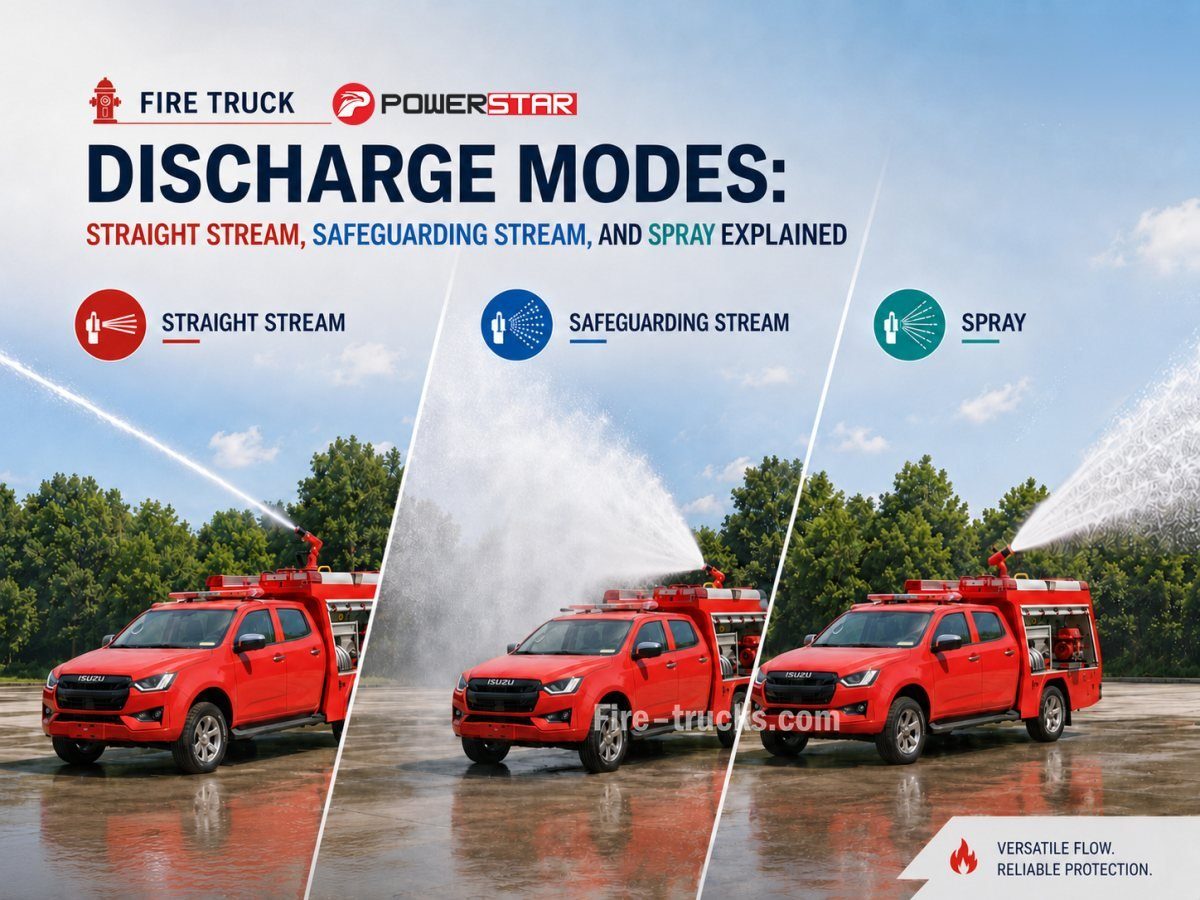
မီးငြှိမ်းသတ်ရေးလုပ်ငန်းများတွင် ထုတ်လွှတ်မှုပုံစံရွေးချယ်ခြင်းသည် မီးငြှိမ်းသတ်မှု ထိရောက်မှု၊ လုပ်ငန်းလုံခြုံရေးနှင့် မီးထိန်းချုပ်နိုင်မှု ထိရောက်ချက်ကို တိုက်ရိုက်ဆုံးဖြတ်ပေးသည်။ လူအများစုသည် မီးသတ်ကား ခေါင်းများသည် အဓိက ရေထုတ်လွှတ်မှုပုံစံ သုံးမျိုးဖြစ်သော တန်းရေစီး၊ ဖြန့်ကျက်ရေစီးနှင့် ကာကွယ်ရေးရေစီးတို့အကြား ပြောင်းလဲအသုံးပြုနိုင်သည်ကို မသိကြပါ။ ပုံစံတစ်မျိုးစီသည် စီးဆင်းမှုပုံစံ၊ အကွာအဝေး၊ ထိခိုက်အားနှင့် ဖုံးလွှမ်းဧရိယာတို့တွင် သိသိသာသာ ကွာခြားပြီး မတူညီသော မီးအခြေအနေများအတွက် အသုံးပြုရမည့် နည်းလမ်းများလည်း လုံးဝကွဲပြားပါသည်။ ဤဆောင်းပါးသည် ကျွမ်းကျင်သော မီးငြှိမ်းသတ်ရေး လုပ်ငန်းစံနှုန်းများကို အခြေခံ၍ ရေထုတ်လွှတ်မှုပုံစံ သုံးမျိုး၏ အခြေခံသဘောတရားများ၊ အဓိကလက္ခဏာများနှင့် အသုံးပြုသင့်သည့် အခြေအနေများကို ပြည့်စုံစွာ ခွဲခြမ်းလေ့လာထားပြီး ကျွန်ုပ်တို့၏ ဖောက်သည်များအား မီးသတ်ကား ရေထုတ်လွှတ်မှုနည်းပညာများကို စနစ်တကျ ကျွမ်းကျင်နိုင်ရန် ကူညီပေးပါသည်။ I. မီးသတ်ကားများတွင် မတူညီသော ရေထုတ်လွှတ်မှုပုံစံများ ဘာကြောင့် လိုအပ်သနည်း? တန်းရေစီး၊ ဖြန့်ကျက်ရေစီးနှင့် ကာကွယ်ရေးရေစီးတို့သည် မီးငြှိမ်းသတ်ရေး ယန္တရား သုံးမျိုးဖြစ်သော ထိခိုက်ဖိအားဖြင့် ငြှိမ်းသတ်ခြင်း၊ အငွေ့ပျံမှုဖြင့် အသက်ရှူကျပ်စေခြင်းနှင့် အပူရောင်ခြည်ကာကွယ်ခြင်းတို့နှင့် ကိုက်ညီပါသည်။ မီးသတ်သမားများသည် နေရာအခြေအနေအရ ပြောင်းလဲအသုံးပြုရမည်ဖြစ်သည်။ ထို့ကြောင့်၊ ရေစီးပုံစံတစ်မျိုးတည်းကို ဘာကြောင့် အမြဲအသုံးမပြုနိုင်သနည်း? 1. မီးအမျိုးအစားများ၏ ကွဲပြားမှုသည် မတူညီသော ငြှိမ်းသတ်ပစ္စည်းပုံစံများကို လိုအပ်စေသည် မီးအမျိုးအစားတစ်မျိုးစီတွင် လောင်ကျွမ်းမှုလက္ခဏာ မတူညီကြပြီး ၎င်းတို့က သင့်လျော်သော ငြှိမ်းသတ်နည်းလမ်းကို သတ်မှတ်ပေးသည်: • Class A အစိုင်အခဲပစ္စည်း မီးများတွင် လောင်ကျွမ်းနေသော ပစ္စည်းများကို ခွဲဖျက်ရန်နှင့် အတွင်းပိုင်းအအေးပေးရန် တန်းရေစီး၏ ထိခိုက်အားကို လိုအပ်သည်; • Class B အရည်မီးများတွင် တန်းရေစီး၏ ထိခိုက်အားကို အသုံးမပြုနိုင်ပါ (ရေဖျန်းပျံ့နှံ့ပြီး မီးပိုမိုပြန့်ပွားစေနိုင်သောကြောင့်)၊ ဖုံးအုပ်ခြင်းနှင့် ပျော့ဖျော့ပျော်စေရန် ကာကွယ်ရေးရေစီး သို့မဟုတ် ဖြန့်ကျက်ရေစီးကို အသုံးပြုသင့်သည်; • Class E လျှပ်စစ်အားရှိသော မီးများတွင် ဖြန့်ကျက်ရေစီးကိုသာ အသုံးပြုနိုင်သည်၊ အကြောင်းမှာ ရေမှုန်သေးများသည် ဆက်တိုက်လျှပ်စီးကူးနိုင်သော လမ်းကြောင်းကို မဖွဲ့စည်းနိုင်သောကြောင့် ဖြစ်သည်; • ပိတ်လှောင်ထားသော နေရာမီးများတွင် ဖြန့်ကျက်ရေစီးဖြင့် နေရာတစ်ခုလုံးကို ဖြည့်ပေးရပြီး အငွေ့ပျံမှု အပူစုပ်ယူခြင်းနှင့် အသက်ရှူကျပ်စေခြင်းမှတစ်ဆင့် မီးငြှိမ်းသတ်ရသည်။ ပုံစံတစ်မျိုးတည်းဖြင့် မီးအမျိုးအစားအားလုံးကို ကိုက်ညီစွာ ကိုင်တွယ်နိုင်မည်မဟုတ်ပါ။ 2. မီးတစ်ခုတည်း၏ အဆင့်ကွဲပြားမှုများသည် မတူညီသော နည်းဗျူဟာများကို လိုအပ်စေသည် မီးတစ်မျိုးတည်းဖြစ်သော်လည်း အဆင့်အလိုက် မတူညီသော ရေထုတ်လွှတ်မှုပုံစံများ လိုအပ်ပါသည်: • မီးပြင်းထန်နေသော အစပိုင်းအဆင့်တွင် မီးနေရာကို အဝေးမှ ထိရောက်စွာ တိုက်ခိုက်၍ အမြန်ထိန်းချုပ်ရန် တန်းရေစီး လိုအပ်သည်; • ရှေ့သို့ တိုးဝင်စဉ်တွင် အပူရောင်ခြည်ကို တားဆီးပြီး ဝန်ထမ်းများကို ကာကွယ်ရန် ရေကာတံတိုင်းဖွဲ့စည်းပေးသော ကာကွယ်ရေးရေစီး လိုအပ်သည်; • အခန်းအတွင်း ဝင်ရောက်မီ မီးခိုးနှင့် ဓာတ်ငွေ့များကို အအေးပေးကာ ပျော့ဖျော့စေရန် ဖြန့်ကျက်ရေစီး လိုအပ်ပြီး အတွင်းပိုင်း တိုက်ခိုက်မှုအတွက် အခြေအနေဖန်တီးပေးသည်။ ရေစီးပုံစံတစ်မျိုးတည်းဖြင့် မီးငြှိမ်းသတ်ရေးလုပ်ငန်းစဉ်တစ်လျှောက်လုံး၏ လိုအပ်ချက်များကို မဖြည့်ဆည်းနိုင်ပါ။ 3. အကွာအဝေ...
အသေးစိတ်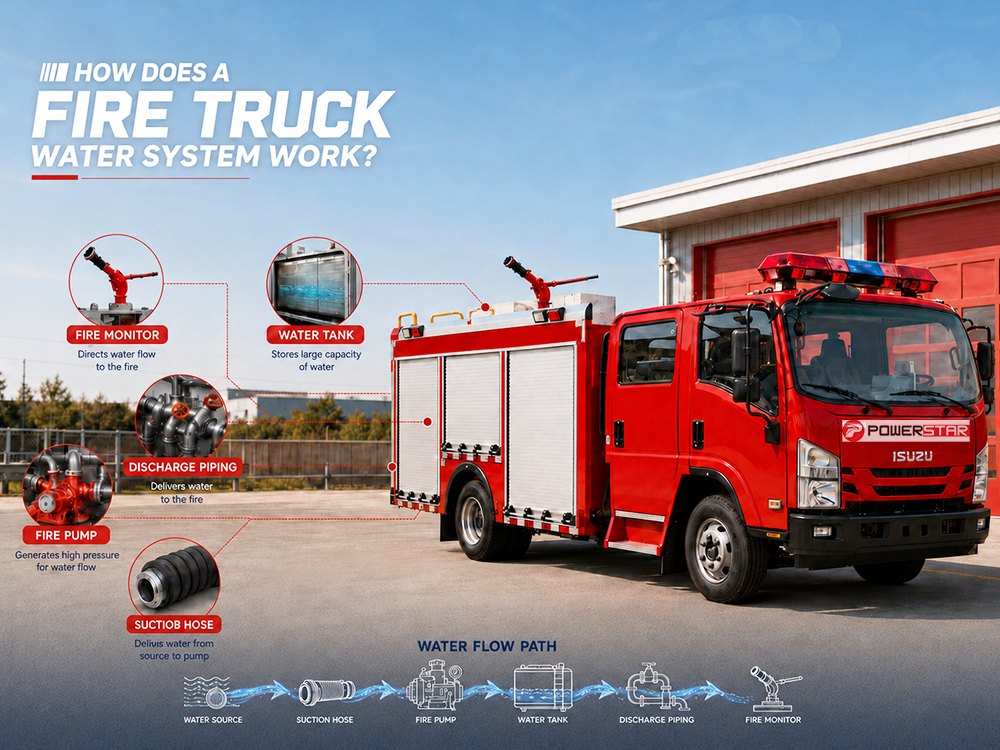
မီးသတ်ယာဉ် ရေပိုက်ဆက်သွယ်မှုစနစ်သည် မီးငြှိမ်းသတ်ရေးလုပ်ငန်းတိုင်း၏ အဓိကအစိတ်အပိုင်းဖြစ်သည်။ ၎င်းသည် တိုင်ကီ သို့မဟုတ် ပြင်ပရေအရင်းအမြစ်မှ ရေကို ပန့်၊ အဆို့ရှင်များနှင့် ပိုက်လိုင်းများမှတစ်ဆင့် တိကျစွာ လမ်းညွှန်ပေးပြီး ဖိအားမြင့်ရေ သို့မဟုတ် အမြှုပ်များကို မီးလောင်ရာနေရာသို့ ပို့ဆောင်ပေးသည် — ထူထပ်သော မြို့လယ်ဧရိယာရှိ အထပ်မြင့်အဆောက်အအုံ မီးလောင်မှုဖြစ်စေ၊ စက်မှုဇုန်ရှိ ရေနံဓာတုသိုလှောင်ကန် မီးလောင်မှုဖြစ်စေ အသုံးပြုနိုင်သည်။မီးသတ်ယာဉ်ရေပိုက်ဆက်သွယ်မှုစနစ်တွင် အပြန်အလှန်ပူးပေါင်းလုပ်ဆောင်သော အစိတ်အပိုင်းများစွာ ပါဝင်သည်။ ၎င်းတို့မှာ မီးသတ်ပန့်၊ ရေတိုင်ကီ၊ စုပ်ပိုက်၊ ရေထုတ်ပိုက်လိုင်း၊ အဆို့ရှင်များ၊ ခွဲဝေချိတ်ဆက်ကိရိယာ၊ စုစည်းချိတ်ဆက်ကိရိယာ၊ စစ်ကာ၊ မီးသတ်ရေဖျန်းခေါင်း၊ ပိုက်ချိတ်ဆက်ကိရိယာများနှင့် အခြားအရာများ ဖြစ်သည်။ ပြီးပြည့်စုံသော ရေစီးဆင်းလမ်းကြောင်းမှာ:ရေတိုင်ကီ → စုပ်ပိုက် → စစ်ကာ → မီးသတ်ပန့် → ဖိအားထိန်းညှိစနစ် → ရေထုတ်ခွဲပိုင်း → အဆို့ရှင်များ → ခွဲဝေချိတ်ဆက်ကိရိယာ → မီးသတ်ရေဖျန်းခေါင်း / ပိုက်ချိတ်ဆက်ကိရိယာများ → ရေပန်းခေါင်း ဤဆောင်းပါးတွင် ရေပိုက်ဆက်သွယ်မှုစနစ်၏ အစိတ်အပိုင်းတစ်ခုချင်းစီနှင့် ၎င်းတို့သည် မှန်ကန်သော ဖိအားနှင့် ရေစီးနှုန်းဖြင့် ရေပို့ဆောင်နိုင်ရန် မည်သို့အတူတကွ လုပ်ဆောင်ကြသည်ကို ရှင်းပြထားသည်။ I. ရေပိုက်ဆက်သွယ်မှုစနစ်၏ အဓိကအစိတ်အပိုင်းများ ရေတိုင်ကီ ယာဉ်ပေါ်ရှိ ရေပေးဝေမှုကို သိုလှောင်ထားသည်။ ● ပမာဏ:ပုံမှန်အားဖြင့် 2,000–12,000 လီတာ ဖြစ်သည်။ ● ပို့ဆောင်မှု:ရေဝင်ပိုက်လိုင်းမှတစ်ဆင့် ပန့်သို့ ရေပို့ပေးသည်။ ● အင်္ဂါရပ်များ:ယာဉ်တည်ငြိမ်မှုအတွက် ရေလှုပ်ရှားမှုလျှော့ချကာများ၊ အညစ်အကြေးများကို စစ်ထုတ်ရန် စစ်ကာနှင့် သဘာဝရေအရင်းအမြစ်များမှ ရေစုပ်ယူရန် အစပြုစနစ် ပါဝင်သည်။ မီးသတ်ပန့် PTO မှတစ်ဆင့် ထရပ်ယာဉ်အင်ဂျင်ဖြင့် မောင်းနှင်သော ဗဟိုလှည့်ပန့်ဖြစ်ပြီး တစ်ဆင့် သို့မဟုတ် အဆင့်များစွာပါဝင်သော ပုံစံ၊ သံရည် သို့မဟုတ် ကြေးဝါဖြင့် ပြုလုပ်ထားသည်။ ●ဖိအားအဆင့်များ: ပုံမှန် မီးငြှိမ်းသတ်ရေးလိုအပ်ချက်များနှင့် ကိုက်ညီသော 0.8 MPa၊ 1.0 MPa၊ 1.2 MPa နှင့် 1.4 MPa အဆင့်များဖြင့် ရရှိနိုင်သည်။ ●ရေစီးနှုန်းများ: 1,200 မှ 6,000 L/min အထိ ရှိပြီး ဖိအားမြင့်နှင့် ရေပမာဏများစွာလိုအပ်သော လုပ်ငန်းများအတွက် စွမ်းဆောင်ရည်မျဉ်းများကို အကောင်းဆုံးပြင်ဆင်ထားသည်။ အဆို့ရှင်များနှင့် ပိုက်လိုင်းများ ရေစီးဆင်းမှု၏ ဦးတည်ချက်နှင့် ပမာဏကို ထိန်းချုပ်ပေးသော ပိုက်များနှင့် အဆို့ရှင်များ၏ ကွန်ရက်ဖြစ်သည်။ ●ရေဝင်အဆို့ရှင်: ပန့်ကို ပြင်ပရေအရင်းအမြစ်များ (မီးသတ်ရေပိုက်ခေါင်း သို့မဟုတ် ရေစုပ်ယူရာနေရာ) နှင့် ချိတ်ဆက်ပေးသည်။ ● တိုင်ကီမှပန့်သို့ အဆို့ရှင်: ပန့်က ယာဉ်ပေါ်ရှိ ရေတိုင်ကီမှ တိုက်ရိုက်ရေစုပ်ယူနိုင်စေသည်။ ● ရေထုတ်အဆို့ရှင်များ: ပိုက်များနှင့် ရေပန်းခေါင်းများသို့ ရေစီးဆင်းမှုကို ထိန်းချုပ်ပေးသည်။ II. မီးသတ်ယာဉ် ရေပိုက်ဆက်သွယ်မှုစနစ် အလုပ်လုပ်ပုံ အဆင့် 1: ရေဝင်ယူခြင်းနှင့် အစပြုစုပ်ယူခြင်း ရေသည် ယာဉ်ပေါ်ရှိ ရေတိုင်ကီ၊ မီးသတ်ရေပိုက်ခေါင်း သို့မဟုတ် သဘာဝရေအရင်းအမြစ်များ (အိုင်များ၊ မြစ်များ၊ ရေကန်များ) မှ စနစ်အတွင်းသို့ ဝင်ရောက်သည်။ သဘာဝရေအရင်းအမြစ်များမှ ရေစုပ်ယူသောအခါ အစပြုစနစ် (လေဟာနယ်ပန့်) သည် စုပ်ပိုက်အတွင်းရှိ လေကို ဖယ်ရှားပြီး လေဟာနယ်တစ်ခု ဖန်တီးပေးသည်။ ထိုသို့ဖြင့် လေထုဖိအားက ရေကို ပန့်အတွင်းသို့ တွန်းပို့နိုင်သည်။ စစ်ကာသည် အညစ်အကြေးများကို စစ်ထုတ်ကာ ပန့်ကို ကာကွယ်ပေးပြီး တားဆီးအဆို့ရှင်က နောက်ပြန်စီးဆင်းမှုကို တားဆီးပေးသည်။ အဆင့် ၂ - ပန့် ဖိအားပေးခြင်း ထရပ်ကာ...
အသေးစိတ်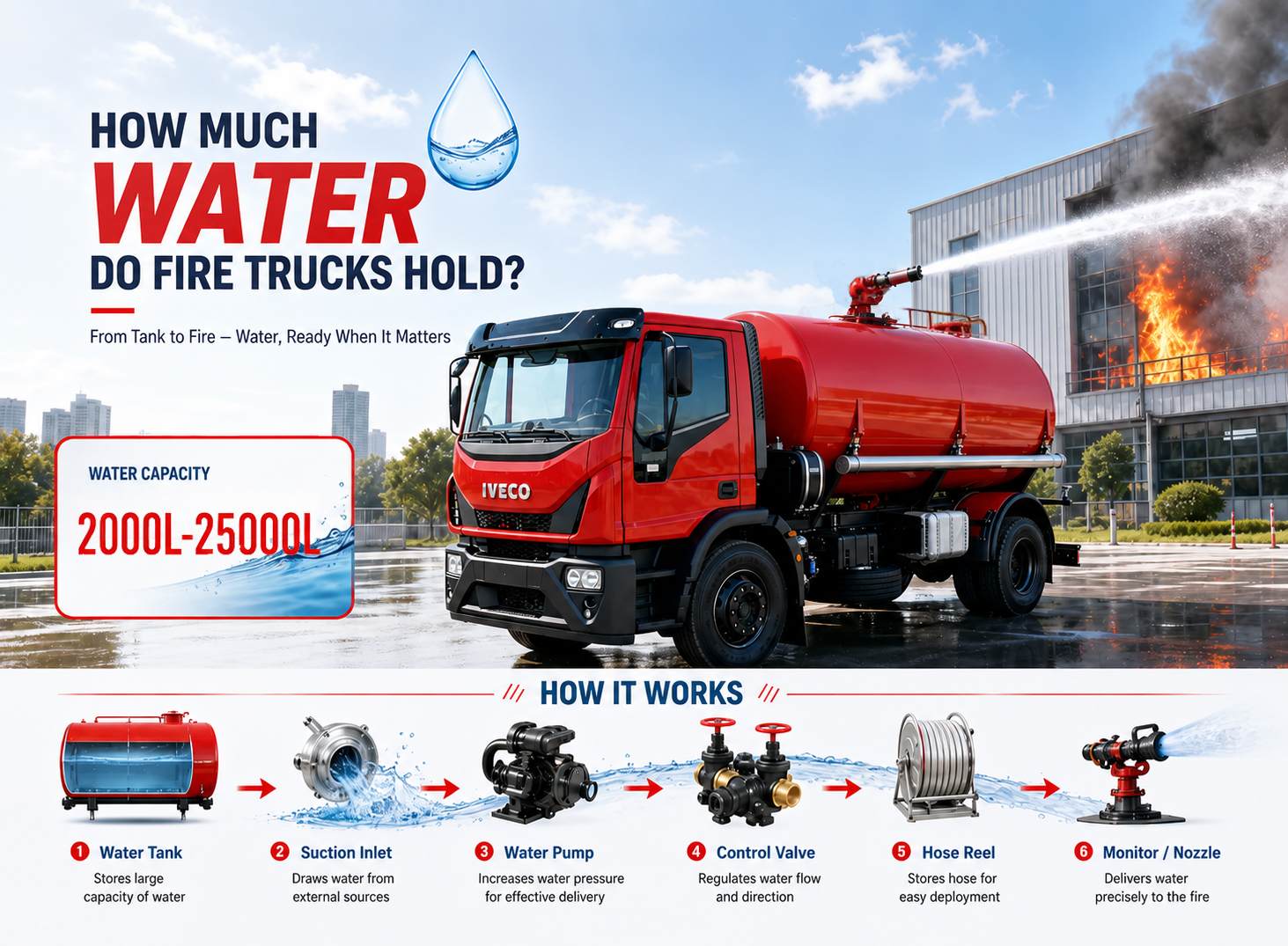
မီးသတ်ကားတစ်စီးက ရေဘယ်လောက် သယ်ဆောင်နိုင်သလဲ။ ဤမေးခွန်းသည် ကျွန်ုပ်တို့၏ဖောက်သည်များ မီးသတ်ကားရွေးချယ်ရာတွင် ပထမဆုံး ရင်ဆိုင်ရသော မေးခွန်းများထဲမှ တစ်ခုဖြစ်သည်။ သတ်မှတ်ထားသော တစ်ခုတည်းသော ကိန်းဂဏန်းမရှိပါ — ယာဉ်အမျိုးအစား၊ ကိုယ်ထည်ခံနိုင်ရည်၊ ဒီဇိုင်းရည်ရွယ်ချက်နှင့် ဒေသဆိုင်ရာ စည်းမျဉ်းများပေါ် မူတည်ပြီး 2,000 လီတာရှိ ပေါ့ပါးအသုံးပြုနိုင်သော ယူနစ်များမှ 25,000 လီတာရှိ စက်မှုလုပ်ငန်းသုံး မီးသတ်ကားများအထိ ကွာခြားနိုင်သည်။ သို့သော် တိုင်ကီပိုကြီးခြင်းသည် အမြဲတမ်း စွမ်းဆောင်ရည်ပိုကောင်းသည်ဟု မဆိုလိုပါ။မီးငြှိမ်းသတ်ရေးယာဉ် ရေတိုင်ကီပမာဏကို ထိရောက်သော မီးငြှိမ်းသတ်မှုရလဒ်များ ရရှိစေရန် ပန့်ရေစီးနှုန်း၊ မော်နီတာမှ ရေထုတ်လွှတ်နှုန်းနှင့် ကိုယ်ထည်ခံနိုင်ရည်တို့နှင့် သင့်လျော်စွာ ကိုက်ညီအောင် သတ်မှတ်ရမည်။ ဤဆောင်းပါးသည် မီးသတ်ကားရေတိုင်ကီပမာဏ၏ အခြေခံအချက်များမှ စတင်ပြီး ယာဉ်အမျိုးအစားအလိုက် ပုံမှန်ရေသိုလှောင်နိုင်သည့် ပမာဏများကို ခွဲခြမ်းစိတ်ဖြာကာ တိုင်ကီဒီဇိုင်းကို သက်ရောက်စေသော အဓိကအချက်များကို လေ့လာပြီး လက်တွေ့ဝယ်ယူရေး လမ်းညွှန်ချက်များကို ပေးထားသည်။ အဓိကအချက်များ: မီးသတ်ကားရေတိုင်ကီပမာဏသည် ပုံမှန်အားဖြင့် 2,000 မှ 25,000 လီတာအထိ ရှိသည် မီးသတ်ကားအမျိုးအစား မတူညီပါက ရေတိုင်ကီပမာဏလည်း မတူညီသည် တိုင်ကီပိုကြီးခြင်းသည် မီးငြှိမ်းသတ်နိုင်စွမ်း ပိုကောင်းသည်ဟု မဆိုလိုပါ တိုင်ကီပမာဏကို ပန့်ရေစီးနှုန်း၊ မော်နီတာစီးနှုန်းနှင့် ကိုယ်ထည်ခံနိုင်ရည်တို့နှင့် ကိုက်ညီအောင် သတ်မှတ်ရမည် စက်မှုလုပ်ငန်းသုံး မီးငြှိမ်းသတ်မှုတွင် ပုံမှန်အားဖြင့် တိုင်ကီကြီးများ လိုအပ်ပြီး မြို့ပြမီးငြှိမ်းသတ်မှုတွင် လှုပ်ရှားရလွယ်ကူမှုကို ဦးစားပေးသည် » I. မီးသတ်ကားရေတိုင်ကီ အခြေခံအမျိုးအစား သုံးမျိုး ရေပန့်မီးသတ်ကားများ:ဤကားများသည် မြို့ပြအသုံးပြုသော အများဆုံးတွေ့ရသည့် မီးသတ်ကားများဖြစ်သည်။ ၎င်းတို့သည် ရေပေးဝေရန် အဓိကအားဖြင့် မီးသတ်ရေပိုက်ခေါင်းများကို အားထားပြီး အစပိုင်းတိုက်ခိုက်မှုအတွက် ကားပေါ်တွင် ခန့်မှန်းခြေ 1,900–3,800 လီတာ ရေ သယ်ဆောင်ထားသည်။ ဤယာဉ်များ၏ အဓိကအစိတ်အပိုင်းမှာ တိုင်ကီမဟုတ်ဘဲ ပန့်ဖြစ်ပြီး ရေပိုက်ခေါင်းနှင့် ချိတ်ဆက်ပြီးနောက် ဖိအားရှိသော ရေကို ပို့လွှတ်ရန် ဒီဇိုင်းပြုလုပ်ထားသည်။ ရေသယ်မီးသတ်ကားများ (Water Tenders):ဤယာဉ်များသည် ရေပမာဏအများအပြား သယ်ယူရန် အထူးပြုထားပြီး တိုင်ကီပမာဏသည် ပုံမှန်အားဖြင့် 11,400 လီတာထက် ကျော်လွန်သည်။ မီးသတ်ရေပိုက်ခေါင်းများ မရရှိနိုင်သော ကျေးလက်နှင့် ဝေးလံသောဒေသများတွင် အရေးကြီးသော အခန်းကဏ္ဍမှ ပါဝင်ပြီး ရေအရင်းအမြစ်များမှ မီးလောင်ရာနေရာသို့ ရေကို သယ်ဆောင်ကာ ပန့်မီးသတ်ကားများ အသုံးပြုနိုင်ရန် ပံ့ပိုးပေးသည်။ ရေပန့်နှင့် ရေသယ်ပေါင်းစပ်မီးသတ်ကားများ:ဤယာဉ်များသည် ရေပန့်လုပ်ဆောင်ချက်နှင့် ရေသယ်ယူမှုလုပ်ဆောင်ချက်တို့ကို ယူနစ်တစ်ခုတည်းတွင် ပေါင်းစပ်ထားသည်။ ၎င်းတို့သည် မီးငြှိမ်းသတ်ရန် ရေကို ထုတ်လွှတ်နိုင်သကဲ့သို့ အခြားယာဉ်များကိုလည်း ရေပေးနိုင်သည်။ တိုင်ကီပမာဏသည် ပုံမှန်အားဖြင့် 5,700 မှ 11,400 လီတာအထိ ရှိပြီး မီးသတ်ဌာနများအတွက် စွယ်စုံအသုံးပြုနိုင်သော ဖြေရှင်းချက်တစ်ခုဖြစ်သည်။ » II. မီးသတ်ကားအမျိုးအစား မတူညီမှုအလိုက် ရေဘယ်လောက် သယ်ဆောင်နိုင်သလဲ? မီးသတ်ကားအမျိုးအစား ပုံမှန်တိုင်ကီပမာဏ အဓိကအသုံးပြုမှု ပေါ့ပါးအသုံးပြုနိုင်သော မီးသတ်ကား 2,000–3,000 L မြို့ပြ အမြန်တုံ့ပြန်မှု၊ အစပိုင်းတိုက်ခိုက်မှု မြို့နယ်သုံး ရေပန့်မီးသတ်ကား 3,000–6,000 L မြို့နယ်မီးငြှိမ်းသတ်မှု၊ အဆောက်အအုံမီးလောင်မှုများ အလယ်အလတ်တာဝန် ရေပန့်မီးသတ်ကား 6,000–10,000 L မြို့ပြနှင့် စက်မှုလုပ်ငန်...
အသေးစိတ်
ဆက်လက်ဖတ်ရှုပါ၊ သတင်းအချက်အလက်များကို စောင့်မျှော်ပါ၊ စာရင်းသွင်းပါ နှင့် သင်၏အမြင်များကို ကျွန်ုပ်တို့အား ပြောပြရန် ကြိုဆိုပါသည်။

 IPv6 ကွန်ယက်ကိုထောက်ခံသည်

 မြန်မာ
 English
 français
 Deutsch
 русский
 italiano
 español
 português
 Nederlands
 العربية
 日本語
日本語 한국의
한국의 Türkçe
 Melayu
 ไทย
ไทย Tiếng Việt
 Indonesia
  中文
中文 қазақ
қазақ Filipino
 српски